
The Arena of Ideas: How Leaders Can Foster Cross-Functional Team Collaboration and Innovation

“Cross-functional collaboration is a strategic necessity for modern organizations. When teams from different departments come together, their diverse viewpoints spark creativity and lead to breakthrough solutions.”

Have you ever been in one of “those” meetings; the kind where the team is up against an obstacle but there is no current agreed path through it so it is time to let the idea juices flow except – NOTHING! It’s like no one wants to start the conversation – no one wants to play in the “Arena of Ideas.” One of the most effective catalysts to real problem-solving is creating an “arena of ideas”—a space where cross-functional teams can freely share, develop, and refine ideas. This approach allows teams to leverage diverse skills and perspectives, ensuring the best solutions come to light.

Cross-functional collaboration is key in this arena, as it brings together individuals from different departments or areas of expertise to work on common goals. By encouraging collaboration across functions, leaders can foster a more innovative, agile, and problem-solving culture​(WordStream).

Table of Contents

  1. What is the Arena of Ideas?
  2. Why Cross-Functional Team Collaboration is Crucial for Innovation
  3. Building Trust: The Cornerstone of Cross-Functional Collaboration
  4. Steps to Building an Arena of Ideas for Cross-Functional Teams
  5. Common Challenges and Solutions in Cross-Functional Collaboration
  6. Conclusion: The Path to Continuous Innovation through Cross-Functional Teamwork

1. What is the Arena of Ideas?

The “arena of ideas” is a dynamic environment where ideas are shared openly, critiqued constructively, and developed collaboratively. This arena thrives on input from all team members, regardless of their department, seniority, or specialization. Leaders create and nurture this arena by facilitating cross-functional collaboration—a process that brings together various experts to solve complex challenges creatively​(Dice)​(Intelemark).


2. Why Cross-Functional Team Collaboration is Crucial for Innovation

Cross-functional collaboration is a strategic necessity for modern organizations. When teams from different departments come together, their diverse viewpoints spark creativity and lead to breakthrough solutions. Research shows that this diversity of thought can generate far more innovative outcomes than teams working in silos​(WordStream)​(Intelemark).

For instance, cross-functional teams can better integrate customer insights, technical expertise, and operational knowledge, resulting in products and services that meet market needs more precisely. Leaders who prioritize this collaborative environment ensure that their teams produce well-rounded, innovative solutions that have a higher impact on business outcomes​(Marie Claire Ross).


3. Building Trust: The Cornerstone of Cross-Functional Collaboration

For cross-functional collaboration to succeed, leaders must foster an atmosphere of trust. Without trust, teams may hesitate to share information or fully engage in collaboration. Studies emphasize the importance of building relationships across departments through transparent communication and shared experiences​(Disruptive Labs)​(Dice).

Leaders play a pivotal role in cultivating trust by:

  • Encouraging open and consistent communication across teams​(Marie Claire Ross).
  • Providing opportunities for team-building exercises that foster understanding​(Intelemark).
  • Offering recognition for collective efforts, reinforcing that teamwork is valued​(WordStream).

As trust grows, teams become more comfortable exchanging ideas, taking risks, and working through challenges together. Trust ensures smoother collaboration and more innovative outcomes​(Disruptive Labs).


4. Steps to Building an Arena of Ideas for Cross-Functional Teams

Creating an arena of ideas is a strategic process that requires intentional actions from leadership. Here’s how leaders can foster cross-functional team collaboration in their organizations:

a) Identify Key Collaborators Across Departments

Leaders should identify and invite key players from various functions who bring different skills and perspectives to the table. A balance of expertise ensures a comprehensive approach to problem-solving.

b) Create Clear Collaboration Goals

Clearly define the purpose of collaboration. Whether the goal is to brainstorm new product ideas or improve an internal process, clarity of purpose helps guide the team’s efforts and ensures alignment across departments​(Intelemark)​(Marie Claire Ross).

c) Set Up Regular Collaborative Meetings

Create a structure where cross-functional team collaboration happens regularly. This could be in the form of weekly brainstorming sessions, cross-departmental check-ins, or innovation workshops where team members work on shared projects​(WordStream).

d) Encourage Open Idea Sharing and Debate

Leaders should encourage all team members to share their ideas openly and debate them constructively. The value of cross-functional collaboration lies in the variety of perspectives that are brought to the table. A healthy exchange of ideas leads to more refined and innovative solutions​(Intelemark)​(Disruptive Labs).

e) Recognize and Implement Ideas

Leaders should recognize contributions from all departments and ensure that valuable ideas from cross-functional teams are acted upon. This reinforces the importance of collaboration and motivates team members to continue contributing​(Marie Claire Ross)​(WordStream).


5. Common Challenges and Solutions in Cross-Functional Collaboration

Cross-functional team collaboration is essential, but it comes with its own set of challenges. Leaders must address these issues proactively to ensure the success of their teams.

a) Communication Barriers

Different functions often have different communication styles or terminologies, leading to misunderstandings. Leaders can mitigate this by establishing common language guidelines and encouraging clear, concise communication​(Intelemark)​(WordStream).

b) Conflicting Priorities

Departments may have competing priorities, which can slow down collaboration. Leaders should facilitate alignment by ensuring that team members understand the shared goals and the importance of the project at hand​(Disruptive Labs).

c) Managing Accountability

In cross-functional teams, accountability can sometimes become diffuse, with no single person responsible for the overall success of a project. Leaders can prevent this by establishing clear roles, assigning specific tasks, and ensuring that everyone understands their individual contributions​(Disruptive Labs)​(Marie Claire Ross).

By addressing these challenges, leaders can maintain a productive environment where cross-functional collaboration flourishes and generates tangible results​(Dice)​(WordStream).


6. Conclusion: The Path to Continuous Innovation through Cross-Functional Teamwork

Creating an “arena of ideas” within an organization fosters a culture where cross-functional collaboration thrives, and innovation becomes second nature. Leaders who understand the importance of bringing diverse perspectives into the idea-generation process will see their teams continuously improve, adapt, and innovate. By nurturing psychological safety, promoting regular collaboration, and addressing challenges head-on, leaders can ensure that their organizations remain at the forefront of innovation​(Marie Claire Ross)​(WordStream).

Sources:

Disruptive Labs. (n.d.). How to master cross-functional team collaboration. Disruptive Labs. Retrieved from https://www.disruptivelabs.io​:contentReference[oaicite:0]{index=0}

Intelemark. (n.d.). Cross-functional team collaboration: Key to workplace innovation. Intelemark. Retrieved from https://www.intelemark.com​:contentReference[oaicite:1]{index=1}

Marie-Claire Ross. (n.d.). 5 steps for leaders to increase cross-functional collaboration. Marie-Claire Ross. Retrieved from https://www.marie-claireross.com​:contentReference[oaicite:2]{index=2}

Harvard Business Review. (n.d.). When cross-functional teams work, and when they don’t. Harvard Business Review. Retrieved from https://hbr.org​:contentReference[oaicite:3]{index=3}


Learning to Lead with AI: A Beginner’s Guide for Forward-Thinking Leaders

“The integration of AI into leadership is not a question of if but when. Leaders who proactively learn about AI and start applying it in their organizations will be better positioned to navigate the complexities of the modern business environment.”

Introduction

Artificial Intelligence (AI) is no longer just a buzzword or a futuristic concept—it’s a critical tool for today’s leaders across all industries. As we navigate an era of rapid technological advancement, understanding and leveraging AI has become essential for effective leadership. This guide aims to provide leaders with a foundational understanding of AI, highlighting its potential to enhance decision-making, streamline operations, and foster innovation. For those ready to embark on this learning journey, here are the essential steps to start with AI.

Table of Contents

  1. Understanding AI: A Primer for Leaders
  2. The Strategic Benefits of AI in Leadership
  3. Steps to Begin Your AI Learning Journey
  4. Common Misconceptions About AI
  5. Recommended Resources for Further Learning
  6. Conclusion

Understanding AI: A Primer for Leaders

Artificial Intelligence, or AI, involves systems or machines capable of performing tasks that typically require human intelligence. This includes everything from analyzing data to recognizing speech and making complex decisions. For leaders, understanding AI is not about becoming a technical expert but rather about learning how to integrate AI into strategic planning and daily operations.

According to a recent study by McKinsey, AI can significantly enhance decision-making processes and drive business growth. As leaders, our role is to understand the potential of AI and to harness its capabilities to achieve our organizational goals.

The Strategic Benefits of AI in Leadership

1. Enhanced Decision-Making Capabilities
AI enables leaders to make more informed decisions by providing insights derived from vast data sets. Machine learning algorithms can identify patterns and predict outcomes, allowing leaders to anticipate market trends and customer behaviors more accurately. As highlighted by Harvard Business Review, “AI tools transform raw data into actionable insights, thereby enhancing strategic decision-making.”

2. Increased Efficiency and Productivity
AI can automate repetitive administrative tasks, such as scheduling, reporting, and data entry, allowing leaders to focus on more strategic activities. A Deloitte survey found that companies using AI-driven automation reported a 20-30% increase in productivity, underscoring the technology’s potential to optimize operations.

3. Personalized Employee Learning and Development
AI can also play a significant role in employee development by customizing training programs based on individual performance and learning styles. This personalized approach not only improves skill development but also increases job satisfaction and retention rates.

Steps to Begin Your AI Learning Journey

For leaders looking to get started with AI, the path doesn’t have to be overwhelming. Here are practical steps to begin your learning journey:

1. Educate Yourself and Your Team
Begin with the basics of AI. Numerous online platforms offer free and paid courses that provide a comprehensive introduction to AI and its applications. Consider starting with resources like Coursera, edX, and LinkedIn Learning.

2. Identify Areas for AI Integration
Examine your organization’s current processes and identify areas where AI could add the most value. This could include anything from automating customer service queries to enhancing data analysis for more strategic decision-making.

3. Start Small with Pilot Projects
Begin with a manageable AI project. For example, you might use AI tools to analyze customer feedback or automate routine administrative tasks. Starting small allows for testing and learning without requiring substantial investment or risking significant disruption.

4. Collaborate with AI Experts
Engaging with AI consultants or partnering with firms specializing in AI can provide valuable insights and guidance. These collaborations can help avoid common pitfalls and accelerate your organization’s AI adoption.

5. Foster a Culture of Learning and Innovation
Encourage your team to embrace AI by promoting a culture of continuous learning and innovation. Provide training opportunities and foster an environment where experimentation with new technologies is encouraged and supported.

Common Misconceptions About AI

AI Will Replace Jobs: A common fear is that AI will lead to widespread job loss. However, AI is more likely to change the nature of work rather than replace it. According to Gartner, AI will augment human capabilities, allowing employees to focus on more strategic, value-added activities.

AI is Only for Tech-Savvy Leaders: Many AI tools are designed to be user-friendly and do not require advanced technical knowledge. Leaders across industries can adopt AI technologies to enhance their operations without needing to become experts in the technology.

AI Implementation is Costly: While some AI solutions can be expensive, many affordable options are available. Cloud-based AI services from providers like Google, Microsoft, and AWS offer scalable, cost-effective solutions suitable for organizations of all sizes.

Recommended Resources for Further Learning

  1. Coursera: AI For Everyone – A beginner-friendly course that provides a comprehensive introduction to AI.
  2. Harvard Online Learning: Introduction to Artificial Intelligence – Explores AI’s fundamental concepts and business applications.
  3. McKinsey’s AI Guide – Offers strategic insights into AI’s impact across industries.

Conclusion

The integration of AI into leadership is not a question of if but when. Leaders who proactively learn about AI and start applying it in their organizations will be better positioned to navigate the complexities of the modern business environment. By embracing AI, leaders can unlock new levels of efficiency, innovation, and growth.

It’s time to embark on this AI learning journey. Start small, think big, and lead your organization into the future with confidence.

Achieving Alignment in Business and Organizational Settings: Why Agreement Isn’t Essential
“Clear outcomes prevent differing assumptions from causing misalignment. “When Teams Can’t Decide” points out that without clear desired outcomes, team members may choose options based on unspoken, differing assumptions (HBR.org, 2008)”

Alignment Agreement in Business and Organizational Settings

In business and organizational settings, achieving alignment does not necessarily mean that all team members agree on every decision or perspective. Rather, alignment is about ensuring that everyone is moving in the same direction towards common goals, even if they have different viewpoints. This concept is crucial for fostering a productive and harmonious work environment. Here’s why alignment doesn’t equate to agreement and the steps to achieve it effectively.

Why Alignment and Agreement Are Different

  1. Diverse Perspectives Enhance Innovation Diverse teams bring varied perspectives, which can lead to innovative solutions and better decision-making. As Bezrukova, Thatcher, and Jehn (2007) suggest, members of heterogeneous groups may disagree on various ideas but still achieve alignment through constructive conflict. Different viewpoints can challenge the status quo and drive innovation, as long as there is a shared commitment to the organization’s goals.
  2. Focus on Common Goals Alignment focuses on shared objectives rather than individual opinions. Kangasharju (2002) discusses how alignment can be achieved in committee meetings by forming oppositional alliances, indicating that even in disagreement, participants can work towards a common goal. This underscores the importance of keeping the bigger picture in mind.
  3. Structured Approaches to Disagreement Structured approaches can help manage disagreements and ensure alignment. Griffith and Gibson Jr. (2001) found that despite disagreements during preproject planning, participants were able to achieve alignment through structured planning processes. This involves setting clear roles, responsibilities, and expectations from the outset.

Steps to Achieve Alignment Amidst Disagreement

  1. Communicate Effectively Clear and open communication is essential for alignment. According to an HBR article, “How to Communicate Your Company’s Strategy Effectively,” talking through areas of confusion or disagreement helps build alignment and commitment (HBR.org, 2022). Regular meetings and transparent discussions can help clarify the organization’s direction and expectations.
  2. Expose and Address Misalignments Rather than letting disagreements simmer, it is crucial to expose and address them directly. The article “A Simple Way to Get Your Leadership Team Aligned on Strategy” emphasizes the importance of surfacing misalignments and dealing with them openly to prevent them from undermining team cohesion (HBR.org, 2019).
  3. Normalize Productive Conflict Conflict, when managed properly, can be productive. An exercise highlighted in “An Exercise to Help Your Team Feel More Comfortable with Conflict” suggests that teams can normalize productive conflict by mapping out the unique value of each role and the tensions that should be expected (HBR.org, 2019). This helps team members understand and appreciate different perspectives while staying aligned with the overall mission.
  4. Set Clear Desired Outcomes Clear outcomes prevent differing assumptions from causing misalignment. “When Teams Can’t Decide” points out that without clear desired outcomes, team members may choose options based on unspoken, differing assumptions (HBR.org, 2008). Defining clear goals and success metrics ensures everyone is on the same page.
  5. Leverage Distributed Leadership Distributed leadership can help manage conflicts and achieve alignment. Choi and Schnurr (2014) discuss how distributed leadership allows team members to solve disagreements and negotiate consensus without relying on a single leader. This empowers team members and fosters a culture of collaboration.
  6. Foster Trust and Respect Building a culture of trust and respect is crucial for alignment. The article “Do You Really Trust Your Team? (And Do They Trust You?)” suggests that handling disagreements respectfully helps maintain trust and alignment (HBR.org, 2019). Trust is the foundation that allows team members to express their views openly and work towards common goals.

Conclusion

In summary, alignment in business and organizational settings is about ensuring that all team members are working towards the same goals, even if they disagree on certain aspects. By communicating effectively, addressing misalignments, normalizing productive conflict, setting clear outcomes, leveraging distributed leadership, and fostering trust and respect, organizations can achieve alignment without requiring complete agreement. This approach not only enhances team performance but also drives innovation and success.

References:

  • Bezrukova, K., Thatcher, S. M. B., & Jehn, K. A. (2007). Group heterogeneity and faultlines: Comparing alignment and dispersion theories of group composition. Conflict in organizational groups. Citeseer. Retrieved from Citeseerx.
  • Griffith, A. F., & Gibson Jr., G. E. (2001). Alignment during preproject planning. Journal of Management in Engineering, ASCE Library. Retrieved from Academia.
  • Kangasharju, H. (2002). Alignment in disagreement: Forming oppositional alliances in committee meetings. Journal of Pragmatics, Elsevier. Retrieved from ScienceDirect.
  • Choi, S., & Schnurr, S. (2014). Exploring distributed leadership: Solving disagreements and negotiating consensus in a ‘leaderless’ team. Discourse Studies. Retrieved from Warwick.
  • HBR.org (2022). How to Communicate Your Company’s Strategy Effectively. Retrieved from HBR.
  • HBR.org (2019). Do You Really Trust Your Team? (And Do They Trust You?). Retrieved from HBR.
  • HBR.org (2019). A Simple Way to Get Your Leadership Team Aligned on Strategy. Retrieved from HBR.
  • HBR.org (2019). An Exercise to Help Your Team Feel More Comfortable with Conflict. Retrieved from HBR.
  • HBR.org (2008). When Teams Can’t Decide. Retrieved from HBR.

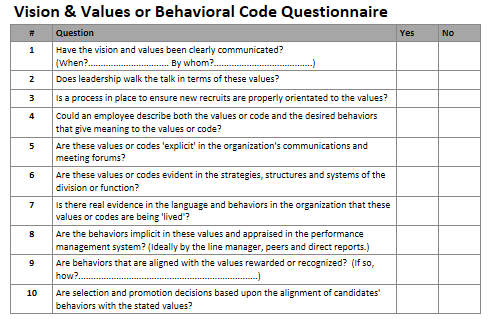
10 Essential Questions to Align Your Business Vision and Values for Success

For values to really stick, they need to be woven into the fabric of the organization.

When business changes consume excessive time and energy it’s easy to lose sight of what truly matters—your organization’s vision and values. But here’s the thing: without a clear understanding of these foundational elements, how can anyone expect to win the game? Just like a team that doesn’t know the rules can’t hope to succeed, an organization without well-communicated vision and values is destined for confusion and inefficiency.

Have the vision and values been clearly communicated? (When? By whom?)

Let’s start with the basics. Effective communication of vision and values is crucial. Imagine trying to play a game without knowing the rules. That’s what it’s like in an organization where the vision isn’t clear. According to a study by Kantabutra and Avery (2010), clear communication of vision boosts organizational performance and employee satisfaction. Think back: when was the last time your vision and values were communicated? Was it during a company-wide meeting by the CEO or in a detailed email from HR?

Citation:
Kantabutra, S., & Avery, G. C. (2010). “The power of vision: Statements that resonate with employees boost their motivation.” Leadership & Organization Development Journal, 31(1), 39-52. Link to the study

Does leadership walk the talk in terms of these values?

Next up is leadership. Their credibility hinges on actions aligning with words. It’s like a fitness instructor who never exercises—hypocrisy is easily spotted. Brown and Treviño (2006) emphasize that ethical leadership, where leaders embody the organization’s values, significantly influences employees’ behavior. So, does your leadership practice what they preach?

Citation:
Brown, M. E., & Treviño, L. K. (2006). “Ethical leadership: A review and future directions.” The Leadership Quarterly, 17(6), 595-616. Link to the study

Is there a process to ensure new recruits are properly orientated to the values?

Starting a new job is overwhelming. That’s why a solid orientation process is key. Bauer et al. (2007) found that well-structured onboarding processes help new employees stick around and perform better because they understand and align with the organization’s culture and values. Does your company ensure new hires grasp the values from day one?

Citation:
Bauer, T. N., Bodner, T., Erdogan, B., Truxillo, D. M., & Tucker, J. S. (2007). “Newcomer adjustment during organizational socialization: A meta-analytic review of antecedents, outcomes, and methods.” Journal of Applied Psychology, 92(3), 707-721. Link to the study

Could an employee describe both the values or code and the desired behaviors that give meaning to them?

It’s one thing to have values on a poster; it’s another for employees to live them. Schwartz (2013) points out that clear, codified values guide employee behavior and decision-making. If you asked a random employee, could they tell you what the company values are and what behaviors exemplify them?

Citation:
Schwartz, S. H. (2013). “An Overview of the Schwartz Theory of Basic Values.” Online Readings in Psychology and Culture, 2(1). Link to the study

Are these values or codes ‘explicit’ in the organization’s communications and meeting forums?

Making values explicit in communications keeps them top of mind. Schein (2010) emphasizes that clear communication is essential for embedding organizational culture. Are your values discussed in meetings, highlighted in newsletters, or prominently displayed in the office?

Citation:
Schein, E. H. (2010). “Organizational Culture and Leadership.” Jossey-Bass, 4th edition. Link to the book

Are these values or codes evident in the strategies, structures, and systems of the division or function?

For values to really stick, they need to be woven into the fabric of the organization. Kaplan and Norton (2004) discuss how aligning strategy with values drives performance and accountability. Are your company’s strategies, structures, and systems reflective of its core values?

Citation:
Kaplan, R. S., & Norton, D. P. (2004). “Strategy Maps: Converting Intangible Assets into Tangible Outcomes.” Harvard Business School Press. Link to the book

Is there real evidence in the language and behaviors in the organization that these values or codes are being ‘lived’?

Walking the talk is crucial. Cameron and Quinn (2011) explain that organizational culture is reflected in behaviors and norms. Do you see evidence of your values in the day-to-day language and actions within your organization?

Citation:
Cameron, K. S., & Quinn, R. E. (2011). “Diagnosing and Changing Organizational Culture: Based on the Competing Values Framework.” Jossey-Bass, 3rd edition. Link to the book

Are the behaviors implicit in these values appraised in the performance management system? (Ideally by the line manager, peers, and direct reports.)

Integrating values into performance reviews ensures consistent reinforcement. Aguinis (2013) discusses how performance management systems can be designed to evaluate and promote value-aligned behaviors. Are employees evaluated on how well they embody the company’s values?

Citation:
Aguinis, H. (2013). “Performance Management.” Pearson Education, 3rd edition. Link to the book

Are behaviors that are aligned with the values rewarded or recognized? (If so, how?)

Rewarding and recognizing value-aligned behaviors reinforces their importance. Podsakoff et al. (2000) highlight that organizational citizenship behaviors, which align with core values, can be encouraged through appropriate reward systems. Are there specific rewards or recognition programs for employees who live the company values?

Citation:
Podsakoff, P. M., MacKenzie, S. B., Paine, J. B., & Bachrach, D. G. (2000). “Organizational citizenship behaviors: A critical review of the theoretical and empirical literature and suggestions for future research.” Journal of Management, 26(3), 513-563. Link to the study

Are selection and promotion decisions based upon the alignment of candidates’ behaviors with the stated values?

Choosing and promoting based on value alignment ensures leadership consistency. Chatman and Cha (2003) discuss the importance of value congruence in selection and promotion processes. When considering candidates for promotion or hiring, are their behaviors and alignment with the company’s values taken into account?

Citation:
Chatman, J. A., & Cha, S. E. (2003). “Leading by leveraging culture.” California Management Review, 45(4), 20-34. Link to the study

Helpful Resources from Harvard Business Review

  1. How to Connect Employees to Your Company’s Purpose – Discusses the importance of communicating vision and values to connect employees to the company’s purpose.
  2. What New Team Leaders Should Do First – Highlights the significance of new leaders clearly communicating vision and values to their teams.
  3. 5 Types of Stories Leaders Need to Tell – Explores how storytelling can be used to communicate organizational values effectively.
  4. All in a Day’s Work – Emphasizes the role of leadership in communicating and garnering support for organizational vision and values.
  5. Six Components of a Great Corporate Culture – Discusses how vision and values are integral to building a strong corporate culture.
  6. Build a Culture That Aligns with People’s Values – Explains the importance of aligning corporate culture with employee values.
  7. How to Frame Your Messages for Maximum Impact – Provides insights on how leaders can effectively frame their vision to motivate teams.
  8. Leadership Is a Conversation – Highlights the necessity of open communication about organizational

Mindfulness and Leadership: Cultivating a Present and Focused Leadership Style

By being present and attentive, leaders can make more informed decisions, communicate more effectively, and foster a positive work environment.

My manager came into my office to ask for status updates on our top Continuous Improvement initiatives. While I was answering he was looking at his phone and replying to a text. This happened regularly. It was so problematic that when the leadership team gathered for our weekly operational reviews he was unable to recall most of the previously shared updates.

Have you seen or done any of these like I have – both seen and done?

  1. During Meetings: A leader might check and respond to emails or messages on their phone while simultaneously trying to participate in a meeting. This divided attention can lead to missing key points of the discussion and appearing disengaged to colleagues.
  2. Managing Team Members: Attempting to handle multiple one-on-one conversations with team members while also working on a project. This can result in not fully listening to or understanding team members’ concerns and giving incomplete or ineffective feedback.
  3. Project Management: Trying to juggle several projects at once by constantly switching back and forth between tasks without dedicating focused time to any single project. This can cause mistakes, overlooked details, and delays in progress.
  4. Decision Making: Making important decisions while simultaneously dealing with interruptions like phone calls, instant messages, or other urgent tasks. This can lead to rushed and poorly considered decisions due to a lack of thorough analysis.
  5. Communication: Writing reports or emails while attending virtual meetings. This can result in poorly written communications and missing critical information being shared during the meeting.

If that’s the case, you, like me, have not practiced being present and focused. In other words, we haven’t been practicing mindfulness.

Understanding Mindfulness in Leadership

Mindfulness, at its core, is the practice of being fully present and engaged in the moment without judgment. It involves paying attention to one’s thoughts, emotions, and sensations as they arise, fostering a deeper awareness of oneself and one’s surroundings. For leaders, mindfulness goes beyond personal well-being; it is about cultivating a leadership style that is responsive, empathetic, and focused.

Research has shown that mindful leadership can transform organizations. According to a study by the Harvard Business Review, mindfulness practices can reduce stress, improve emotional regulation, and enhance overall job performance. By being present and attentive, leaders can make more informed decisions, communicate more effectively, and foster a positive work environment.

Benefits of Mindfulness for Leaders

The benefits of mindfulness for leaders are multi-faceted, impacting both personal well-being and organizational success. Here are some key advantages:

  1. Improved Focus and Clarity: Mindfulness helps leaders maintain focus on the task at hand, reducing distractions and enhancing decision-making abilities. This clarity allows for more strategic thinking and problem-solving.
  2. Enhanced Emotional Intelligence: Mindful leaders are more in tune with their emotions and those of their team members. This heightened emotional intelligence enables better conflict resolution and stronger interpersonal relationships.
  3. Reduced Stress and Burnout: Regular mindfulness practice has been shown to decrease stress levels and prevent burnout. Leaders who manage their stress effectively can maintain their energy and enthusiasm, setting a positive example for their team.
  4. Better Adaptability: In a rapidly changing business environment, the ability to adapt is crucial. Mindfulness fosters cognitive flexibility, allowing leaders to respond to new challenges with agility and creativity.

A study published in the Journal of Applied Psychology found that leaders who practice mindfulness are more resilient and better equipped to handle the demands of their roles. This resilience is essential for navigating the complexities of modern leadership.

How to Incorporate Mindfulness into Your Leadership Style

Incorporating mindfulness into your leadership style doesn’t require significant time investment; rather, it involves small, consistent practices that can be integrated into your daily routine. Here are some practical steps to get started:

  1. Start with Self-Awareness: Begin by paying attention to your own thoughts and emotions. Set aside a few minutes each day to practice mindful breathing or meditation. Apps like Headspace or Calm can guide you through these exercises.
  2. Practice Active Listening: When engaging with team members, practice active listening. Focus fully on the speaker, avoid interrupting, and reflect back what you’ve heard. This fosters a deeper connection and understanding.
  3. Mindful Meetings: Begin meetings with a moment of mindfulness, such as a brief breathing exercise. This sets a calm tone and helps participants be more present and engaged.
  4. Encourage Mindfulness in Your Team: Promote a culture of mindfulness within your organization. Offer training sessions or resources on mindfulness practices and encourage team members to take breaks and practice self-care.

The implementation of these practices can have a profound impact on your leadership style and your organization’s culture. According to a report by the Center for Creative Leadership, leaders who integrate mindfulness into their daily routines experience improved job satisfaction and team performance.

In conclusion, mindfulness is not just a personal wellness practice; it is a powerful leadership tool. By cultivating mindfulness, leaders can enhance their focus, emotional intelligence, and resilience, leading to more effective and compassionate leadership. As the business landscape continues to evolve, mindfulness offers a timeless approach to navigating the challenges and opportunities that lie ahead.


Sources:

  1. Harvard Business Review, “Mindfulness Can Improve Strategy, Execution, and Your Bottom Line.”
  2. Journal of Applied Psychology, “The Impact of Mindfulness on Leadership Resilience.”
  3. Center for Creative Leadership, “The Benefits of Mindful Leadership for Organizational Success.”

Human-Centric Automation: Unleashing Potential and Empowering Growth

Standardizing automation involves creating consistent, repeatable processes managed by automated systems. This reduces variability, minimizes errors, and ensures high-quality outcomes.

One of the main tasks of operations leadership is enhancing efficiency and productivity. As a Production Manager, I’ve experienced firsthand the time-consuming nature of paper inspections. These manual processes often divert valuable time away from critical team interactions and strategic problem-solving.

To address this, I’ve implemented automation for our quality checks. This shift from manual paperwork to automated processes not only streamlines operations but also frees up operations leaders to focus on problem-solving and team development. Embracing automation allows us to invest more in our people and cultivate a strong organizational culture.

Table of Contents

  1. The Power of Standardization in Automation
  2. Liberating Operations Leaders to Lead and Inspire
  3. Real-World Examples
  4. Conclusion: The Human Side of Automation

The Power of Standardization in Automation

Standardizing automation involves creating consistent, repeatable processes managed by automated systems. This reduces variability, minimizes errors, and ensures high-quality outcomes. As highlighted by Harvard Business Review, “Standardizing processes is a crucial step in leveraging the full potential of automation. It creates a stable foundation upon which innovative and creative work can thrive.”

Liberating Operations Leaders to Lead and Inspire

Automating routine tasks allows operations leaders to focus on strategic activities and team development. Here’s how this transformation benefits the organization:

Enhanced Employee Engagement

Operations leaders who have the time to engage with their teams can foster stronger relationships and create a more inclusive work environment. They can better understand employees’ needs, aspirations, and challenges, leading to more personalized and effective leadership. According to Harvard Business Review, “Automation of administrative tasks frees managers to focus on coaching and development, significantly boosting team engagement.”

Building a Positive Culture

Trust, communication, and shared values form the bedrock of a strong organizational culture. Freed from administrative burdens, operations leaders can invest in team-building exercises, open forums, and one-on-one meetings, fostering a sense of belonging and shared purpose. As noted by Harvard Business Review, “Culture-building activities are essential in both traditional and hybrid work environments.”

Encouraging Innovation

With less focus on routine tasks, operations leaders can cultivate a culture of innovation. They can encourage teams to think creatively, experiment with new ideas, and take calculated risks. “When managers are freed from routine tasks, they can better support innovation and creativity within their teams,” emphasizes a Harvard Business Review article.

Personal and Professional Development

Operations leaders with more time for mentoring and coaching can significantly impact their team’s growth. By providing regular feedback, setting clear goals, and supporting professional development, they help employees reach their full potential. As stated in Harvard Business Review, “Investing in the professional development of employees not only enhances their skills but also boosts morale and job satisfaction.”

Real-World Examples

The benefits of this approach are evident in many organizations. Toyota’s adoption of standardized automation in manufacturing has enabled operations leaders to concentrate more on their teams, fostering a culture of continuous improvement and employee development.

In the tech industry, companies like Google and Microsoft use automation to handle repetitive coding and testing tasks. This allows operations leaders and senior engineers to focus on innovative projects and mentoring junior staff, promoting a collaborative and growth-oriented environment.

Conclusion: The Human Side of Automation

While automation and standardization are often viewed through the lens of efficiency and productivity, their true value lies in freeing up human potential. By automating routine tasks, operations leaders can focus on what truly matters—people. They can build stronger relationships, foster a positive culture, and drive innovation, ultimately leading to a more engaged and motivated workforce.

As we continue to embrace automation, it’s essential to recognize that its greatest benefit is not just in performing tasks but in creating time and space for human connection and growth. This balance of technology and humanity is what will drive organizations towards sustainable success.

The Power of One-on-One Meetings: Enhancing Employee Development and Trust

One-on-one meetings provide a safe space for employees to discuss challenges they are facing in their roles. Leaders can offer support, resources, and solutions to help employees overcome these challenges, thereby improving job satisfaction and productivity.

Business leadership is a multifaceted endeavor that requires a balance of strategic vision, operational oversight, and human-centric management. Among the many tools available to leaders, one-on-one meetings with direct reports stand out as a critical practice for promoting employee development and embodying the principles of servant leadership. This article delves into the importance of these meetings, exploring how they enhance professional growth, build trust, and strengthen organizational culture.


Table of Contents

  1. Introduction
  2. Why One-on-One Meetings Matter
  3. Enhancing Employee Development
  4. Embodying Servant Leadership
  5. Practical Tips for Effective One-on-One Meetings
  6. Conclusion

Introduction

One-on-one meetings are private, scheduled interactions between a leader and their direct report. These meetings provide a platform for personalized feedback, career development discussions, and the addressing of any concerns or challenges the employee may face. As a business leader, regular one-on-one meetings can significantly impact your team’s performance, satisfaction, and growth.

Why One-on-One Meetings Matter

One-on-one meetings matter because they create a dedicated time for managers to connect with their team members on a personal level. These meetings allow for open communication, personalized feedback, and the fostering of a trust-based relationship. According to a report by Gallup, employees who meet regularly with their managers are almost three times more likely to be engaged at work compared to those who do not​​.

Enhancing Employee Development

Personalized Feedback and Growth

Regular one-on-one meetings are an excellent opportunity for leaders to provide tailored feedback to their direct reports. Personalized feedback helps employees understand their strengths and areas for improvement in a nuanced way that generic group feedback cannot achieve. This feedback is crucial for professional growth as it guides employees on their career path and helps them achieve their goals more effectively.

Career Development

These meetings also serve as a platform for career development discussions. Leaders can help employees identify their career aspirations, set realistic goals, and develop action plans to achieve them. This not only enhances the individual’s professional growth but also aligns their career trajectory with the organization’s strategic objectives​​.

Addressing Challenges and Providing Support

One-on-one meetings provide a safe space for employees to discuss challenges they are facing in their roles. Leaders can offer support, resources, and solutions to help employees overcome these challenges, thereby improving job satisfaction and productivity. Addressing issues promptly in these meetings can prevent small problems from escalating into larger issues.

Embodying Servant Leadership

Building Trust and Strengthening Relationships

Servant leadership is about putting the needs of employees first and helping them develop and perform as highly as possible. One-on-one meetings are a direct manifestation of this leadership style. By dedicating time to listen to employees and address their needs, leaders build trust and demonstrate that they value their team members as individuals. This approach fosters a positive work environment where employees feel respected and valued​​.

Empowering Employees

Through these meetings, leaders can empower their employees by involving them in decision-making processes and encouraging them to take ownership of their work. Empowered employees are more likely to be proactive, innovative, and committed to the organization’s success.

Fostering a Culture of Continuous Improvement

Regular one-on-one meetings contribute to a culture of continuous improvement. They provide ongoing opportunities for feedback and development, which can lead to incremental improvements in both individual performance and overall team effectiveness.

Practical Tips for Effective One-on-One Meetings

Schedule Regularly and Stick to the Schedule

Consistency is key. Schedule regular meetings (e.g., weekly or bi-weekly) and make sure they are a priority. Cancelling or rescheduling these meetings can send a message that they are not important.

Prepare in Advance

Both the leader and the employee should come prepared. Leaders should have a clear agenda, including topics like performance feedback, goal setting, and any ongoing projects. Employees should also be encouraged to bring their own topics and questions to the meeting.

Create a Safe and Open Environment

Ensure that the meeting environment is conducive to open and honest communication. This means being an active listener, showing empathy, and ensuring confidentiality when necessary.

Focus on Development, Not Just Performance

While it is important to discuss performance, make sure to also focus on the employee’s development. Discuss their career aspirations, provide guidance on skill development, and explore opportunities for growth within the organization​​​​.

Conclusion

One-on-one meetings are a vital tool in the arsenal of effective business leaders. They enhance employee development, embody the principles of servant leadership, and foster a culture of continuous improvement. By prioritizing these meetings and conducting them effectively, leaders can build stronger, more productive teams and drive their organizations toward greater success.

By focusing on the development and well-being of employees, leaders not only improve individual performance but also strengthen the entire organization. Start scheduling regular one-on-one meetings with your direct reports today and witness the transformative impact they can have on your leadership and your team’s success.

Defeating Organizational Narcissism: Empowering Employees for a Healthier Workplace

Organizational narcissism is a significant issue that can lead to widespread dysfunction within the workplace. By understanding its characteristics and impacts, and by taking proactive steps to address it, organizations can create a healthier, more supportive environment where employees feel valued and aligned with the organization’s true values.

Navigating the modern workplace can be challenging, especially when deeper issues within the organization make you feel like you’re the problem. This is often the result of organizational narcissism—a pervasive issue where the organization prioritizes its image and success over the well-being of its employees. Let’s delve into what this means, how it manifests, and what you can do if you find yourself in such an environment.

What is Organizational Narcissism?

Imagine working in a place where the company seems obsessed with its image and achievements, often at the expense of its employees. This is what organizational narcissism looks like. In such environments, the focus is on maintaining a positive external image, sometimes to the detriment of the internal culture and employee well-being.

Signs and Symptoms

  1. Self-Centered Leadership: Leaders in narcissistic organizations often care more about their own success and public image than about the health and growth of their team. This can create a toxic environment where employees feel unsupported and undervalued.
  2. Values Misalignment: There’s a stark difference between what the organization claims to value and what it actually practices. This disconnect can leave employees feeling confused and frustrated when their efforts to align with the company’s stated values go unrecognized or are even contradicted by leadership behaviors.
  3. Poor Management Practices: Micromanagement, lack of support, and constant criticism are common in narcissistic organizations. Such practices stifle creativity and make employees feel like they can never do anything right.
  4. Toxic Culture: The overall atmosphere in a narcissistic organization can be incredibly negative. Employees might face unrealistic expectations and a pervasive blame culture, leading to high turnover rates and widespread dissatisfaction.

The Emotional Toll on Employees

Working in a narcissistic organization can take a serious toll on your mental and emotional well-being. Here’s how:

  • Self-Doubt and Blame: When problems arise, you might be led to believe it’s your fault, even if the issues are systemic. This constant self-doubt can erode your confidence and make you question your abilities.
  • Decreased Job Satisfaction: Misalignment between your personal values and the organization’s practices can make you feel disconnected and unfulfilled, leading to disengagement.
  • Mental Health Struggles: The stress of navigating such a toxic environment can result in anxiety, depression, and burnout.

How to Recognize and Address Organizational Narcissism

It’s important to recognize the signs of organizational narcissism and take steps to protect your well-being. Here are some strategies:

  1. Promote Empathy and Support: If you’re in a leadership position, encourage an empathetic approach that prioritizes the well-being of your team. If you’re an employee, look for ways to support your colleagues and foster a sense of community.
  2. Align Values with Practices: Push for transparency and accountability in how the organization lives up to its stated values. This can help rebuild trust and ensure that the company’s practices reflect its principles.
  3. Foster Open Communication: Advocate for open and honest communication channels where employees can voice their concerns without fear of retribution. This can help address issues before they escalate and create a more supportive environment.
  4. Provide Constructive Feedback: Shift the culture from one of criticism to one of constructive feedback. Helping employees grow by recognizing their strengths and areas for improvement in a supportive manner can make a big difference.

Conclusion

Organizational narcissism is a significant issue that can lead to widespread dysfunction within the workplace. By understanding its characteristics and impacts, and by taking proactive steps to address it, organizations can create a healthier, more supportive environment where employees feel valued and aligned with the organization’s true values.

If you find yourself in a narcissistic organization, remember: the problem is not you. Understanding the dynamics at play can help you navigate the situation more effectively and take steps to protect your mental and emotional well-being.

For further reading on the impact of organizational narcissism and strategies to address it, consider exploring these sources:

  1. Is Your Leadership Creating Silos? – Dranitsaris-Hilliard
  2. Tune in, Breakdown, and Reboot – CBS Research Portal
  3. Narcissism in the Workplace: Strategies for Management and Co-workers
  4. Organizational Narcissism and Defensive Routines – LinkedIn
  5. When ‘Me’ Trumps ‘We’: Narcissistic Leaders and the Cultures They Create

Nurturing Leaders: Importance of Leadership Development Plans

Picture this: You’re a manager at a relatively average performing company. Your team has been doing well, but you notice that some on your leadership team are struggling to fully reach their potential. Their technical skills are top-notch, but when it comes to leading a project or managing a team, they seem to falter. You realize that while you’ve been focusing on their immediate tasks, you’ve neglected to prepare them for the bigger picture—leading your organization into the future. This realization pushes you to dive into the world of leadership development plans

Why Leadership Development Plans Matter

Leadership development plans are crucial for nurturing the next generation of leaders. They help bridge the gap between current capabilities and the skills needed to lead effectively. As Zenger, Ulrich, and Smallwood (2000) put it, “Leadership development is less about learning specific, tactical skills than it is about cultivating the broad capabilities needed to lead effectively in various situations.” It’s about preparing your team for whatever challenges lie ahead.

Step-by-Step Guide to Creating Leadership Development Plans

  1. Know, See, Plan, Do Model – The Know, See, Plan, Do (KSPD) model is a structured approach to leadership development. Allen, Miguel, and Martin (2014) suggest this model integrates both theoretical knowledge and practical application. Here’s how it works:
    • Know: Understand the key competencies and skills required for leadership roles.
    • See: Observe and identify potential leaders within your team.
    • Plan: Develop a personalized development plan for each potential leader.
    • Do: Implement the plan through practical experiences and continuous feedback.
  2. Engage Employees as Active Participants Leadership development isn’t a one-way street. It’s essential to involve your employees in their own development. Niehaus, O’Rourke, and Ostick (2012) emphasize that engaging students (or employees) as agents in their own development enhances their learning and prepares them for future roles. This means encouraging them to take ownership of their growth, set their own goals, and seek out opportunities for improvement.
  3. Incorporate Emotional Intelligence Training Emotional intelligence is a critical component of effective leadership. Sadri (2012) notes that integrating emotional intelligence practices into leadership development programs significantly enhances both personal and professional growth. Focus on developing skills like empathy, self-awareness, and interpersonal communication. These skills help leaders manage their teams more effectively and create a positive work environment.
  4. Blend Theory with Practical Application A comprehensive framework for leadership development must blend theoretical knowledge with practical application. Cacioppe (1998) argues that integrating theory and practice is crucial for effective leadership development. This could involve combining formal training sessions with real-world leadership opportunities, such as leading projects or mentoring junior staff.
  5. Customize Development PlansOne size doesn’t fit all when it comes to leadership development. Personalized development plans that cater to the individual needs of each potential leader are vital. Pernick (2001) outlines nine essential tasks for creating effective leadership development programs, emphasizing the need for tailored plans. Assess the strengths and weaknesses of each individual and design a plan that addresses their unique development needs.

Real-World Example: Implementing a Leadership Development Plan

Let’s circle back to our initial scenario. As the manager, you decide to implement a leadership development plan for your team. You start by using the KSPD model to understand what skills are necessary for leadership roles within your company. You identify key team members who show potential and engage them in their own development process. You incorporate emotional intelligence training and blend theoretical knowledge with practical leadership opportunities. Finally, you customize the development plans to fit each individual’s needs.

Conclusion: Start Developing Leaders Today

Creating effective leadership development plans is essential for any organization looking to thrive in the future. By following these steps, you can ensure that your team is ready to take on leadership roles and drive your organization forward. Remember, leadership development is an ongoing process—keep evaluating and refining your plans to meet the evolving needs of your team and organization.

References

Leading Through Crisis: Strategies for Effective Crisis Management

According to research, leaders who effectively manage crises demonstrate strong communication skills, quick decision-making abilities, and a deep understanding of their organization’s core values and mission.

Importance of Crisis Management in Leadership

Crisis management is a critical skill for leaders in any organization. In today’s fast-paced and unpredictable world, leaders must be prepared to handle unexpected challenges that can disrupt operations, damage reputations, and impact the bottom line. Effective crisis management not only mitigates the immediate impact of a crisis but also helps in building long-term resilience and trust within the organization.

According to research, leaders who effectively manage crises demonstrate strong communication skills, quick decision-making abilities, and a deep understanding of their organization’s core values and mission. They are able to keep their teams focused, maintain stakeholder confidence, and navigate the organization through turbulent times. Additionally, a well-managed crisis can even provide opportunities for growth and innovation, as organizations learn to adapt and improve their processes.

Key Steps in Leading Through a Crisis

1. Assess the Situation

The first step in any crisis is to understand the scope and impact. Leaders must gather accurate information quickly and assess the potential damage. This involves identifying the root cause of the crisis, the stakeholders affected, and the resources available to address the situation. A comprehensive assessment allows leaders to prioritize actions and allocate resources effectively.

During the assessment phase, it is crucial to involve key team members and experts who can provide valuable insights. This collaborative approach ensures that all perspectives are considered and that the response plan is well-rounded. Additionally, leveraging technology and data analytics can enhance the accuracy and speed of the assessment, enabling leaders to make informed decisions more rapidly.

2. Communicate Transparently

Transparent communication is essential during a crisis. Leaders must provide clear, concise, and honest information to all stakeholders. This helps to prevent misinformation, reduces panic, and builds trust. Regular updates and open channels of communication are crucial.

Effective communication involves not only disseminating information but also actively listening to concerns and feedback. By engaging with employees, customers, and other stakeholders, leaders can address their needs and demonstrate empathy. This two-way communication fosters a sense of solidarity and cooperation, which is vital for navigating through the crisis together. Addressing concerns directly, without sugarcoating or offering false assurances, is vital for maintaining credibility and trust .

3. Formulate a Response Plan

Once the situation is assessed, leaders need to develop a strategic response plan. This plan should outline immediate actions to contain the crisis, steps to mitigate its impact, and long-term strategies for recovery. Involving key team members in the planning process ensures a more comprehensive and effective response.

The response plan should be flexible and adaptable, allowing for adjustments as new information becomes available. It should also include clear roles and responsibilities for each team member, ensuring that everyone knows their tasks and can act swiftly. Additionally, leaders should consider potential scenarios and develop contingency plans to address various outcomes.

4. Take Decisive Action

Effective leaders are decisive. They make informed decisions quickly to address the crisis and prevent further escalation. This may involve mobilizing resources, reallocating tasks, and making tough choices to safeguard the organization’s interests.

Taking decisive action requires confidence and the ability to stay calm under pressure. Leaders must rely on their experience, intuition, and the expertise of their team to make the best decisions possible. It is also important to communicate these decisions clearly and ensure that everyone understands the rationale behind them. This transparency helps to maintain trust and cooperation among team members.

As you make decisions and take action during a crisis, communicate those actions truthfully and honestly. As your response evolves, keep employees updated and aware that everyone involved in the crisis may have different perspectives and information .

5. Monitor and Adjust

Crisis situations are dynamic and can change rapidly. Continuous monitoring of the situation and being flexible to adjust the response plan as needed is crucial. Leaders must stay vigilant and be prepared to pivot their strategies based on new information and evolving circumstances.

Monitoring the situation involves tracking key metrics and indicators that can provide insights into the effectiveness of the response plan. Leaders should also stay informed about external factors that may impact the crisis, such as changes in regulations, market conditions, or public sentiment. By staying agile and responsive, leaders can ensure that their actions remain relevant and effective.

6. Learn and Reflect

After the crisis is managed, it is important to conduct a thorough review. Analyzing what worked, what didn’t, and how the organization can improve its crisis management strategies is vital for future preparedness. This reflection helps in building a more resilient organization.

Leaders should document the lessons learned and share them with the entire organization. This promotes a culture of continuous improvement and encourages everyone to contribute to the development of better practices. Additionally, conducting regular crisis simulations and training sessions can help to reinforce these lessons and ensure that the organization is better prepared for future challenges.

Conclusion

Effective crisis management is a hallmark of strong leadership. By assessing situations accurately, communicating transparently, formulating strategic plans, taking decisive actions, and learning from each experience, leaders can navigate their organizations through crises and emerge stronger. The ability to lead through a crisis not only safeguards the organization but also builds a resilient and trust-based culture, essential for long-term success.

In summary, crisis management requires a combination of skills, including strategic thinking, effective communication, and the ability to remain calm under pressure. Leaders who excel in these areas are better equipped to handle the challenges that crises present and can turn these situations into opportunities for growth and improvement. By learning from past experiences and continuously improving their crisis management strategies, organizations can build a stronger foundation for future success.


References

  1. Cecchi-Dimeglio, P. (2024, February 19). A Leader’s Guide to Navigating Through Crisis. Forbes.
  2. Center for Creative Leadership. (n.d.). How to Lead Through a Crisis.