
The Arena of Ideas: How Leaders Can Foster Cross-Functional Team Collaboration and Innovation

“Cross-functional collaboration is a strategic necessity for modern organizations. When teams from different departments come together, their diverse viewpoints spark creativity and lead to breakthrough solutions.”

Have you ever been in one of “those” meetings; the kind where the team is up against an obstacle but there is no current agreed path through it so it is time to let the idea juices flow except – NOTHING! It’s like no one wants to start the conversation – no one wants to play in the “Arena of Ideas.” One of the most effective catalysts to real problem-solving is creating an “arena of ideas”—a space where cross-functional teams can freely share, develop, and refine ideas. This approach allows teams to leverage diverse skills and perspectives, ensuring the best solutions come to light.

Cross-functional collaboration is key in this arena, as it brings together individuals from different departments or areas of expertise to work on common goals. By encouraging collaboration across functions, leaders can foster a more innovative, agile, and problem-solving culture​(WordStream).

Table of Contents

  1. What is the Arena of Ideas?
  2. Why Cross-Functional Team Collaboration is Crucial for Innovation
  3. Building Trust: The Cornerstone of Cross-Functional Collaboration
  4. Steps to Building an Arena of Ideas for Cross-Functional Teams
  5. Common Challenges and Solutions in Cross-Functional Collaboration
  6. Conclusion: The Path to Continuous Innovation through Cross-Functional Teamwork

1. What is the Arena of Ideas?

The “arena of ideas” is a dynamic environment where ideas are shared openly, critiqued constructively, and developed collaboratively. This arena thrives on input from all team members, regardless of their department, seniority, or specialization. Leaders create and nurture this arena by facilitating cross-functional collaboration—a process that brings together various experts to solve complex challenges creatively​(Dice)​(Intelemark).


2. Why Cross-Functional Team Collaboration is Crucial for Innovation

Cross-functional collaboration is a strategic necessity for modern organizations. When teams from different departments come together, their diverse viewpoints spark creativity and lead to breakthrough solutions. Research shows that this diversity of thought can generate far more innovative outcomes than teams working in silos​(WordStream)​(Intelemark).

For instance, cross-functional teams can better integrate customer insights, technical expertise, and operational knowledge, resulting in products and services that meet market needs more precisely. Leaders who prioritize this collaborative environment ensure that their teams produce well-rounded, innovative solutions that have a higher impact on business outcomes​(Marie Claire Ross).


3. Building Trust: The Cornerstone of Cross-Functional Collaboration

For cross-functional collaboration to succeed, leaders must foster an atmosphere of trust. Without trust, teams may hesitate to share information or fully engage in collaboration. Studies emphasize the importance of building relationships across departments through transparent communication and shared experiences​(Disruptive Labs)​(Dice).

Leaders play a pivotal role in cultivating trust by:

  • Encouraging open and consistent communication across teams​(Marie Claire Ross).
  • Providing opportunities for team-building exercises that foster understanding​(Intelemark).
  • Offering recognition for collective efforts, reinforcing that teamwork is valued​(WordStream).

As trust grows, teams become more comfortable exchanging ideas, taking risks, and working through challenges together. Trust ensures smoother collaboration and more innovative outcomes​(Disruptive Labs).


4. Steps to Building an Arena of Ideas for Cross-Functional Teams

Creating an arena of ideas is a strategic process that requires intentional actions from leadership. Here’s how leaders can foster cross-functional team collaboration in their organizations:

a) Identify Key Collaborators Across Departments

Leaders should identify and invite key players from various functions who bring different skills and perspectives to the table. A balance of expertise ensures a comprehensive approach to problem-solving.

b) Create Clear Collaboration Goals

Clearly define the purpose of collaboration. Whether the goal is to brainstorm new product ideas or improve an internal process, clarity of purpose helps guide the team’s efforts and ensures alignment across departments​(Intelemark)​(Marie Claire Ross).

c) Set Up Regular Collaborative Meetings

Create a structure where cross-functional team collaboration happens regularly. This could be in the form of weekly brainstorming sessions, cross-departmental check-ins, or innovation workshops where team members work on shared projects​(WordStream).

d) Encourage Open Idea Sharing and Debate

Leaders should encourage all team members to share their ideas openly and debate them constructively. The value of cross-functional collaboration lies in the variety of perspectives that are brought to the table. A healthy exchange of ideas leads to more refined and innovative solutions​(Intelemark)​(Disruptive Labs).

e) Recognize and Implement Ideas

Leaders should recognize contributions from all departments and ensure that valuable ideas from cross-functional teams are acted upon. This reinforces the importance of collaboration and motivates team members to continue contributing​(Marie Claire Ross)​(WordStream).


5. Common Challenges and Solutions in Cross-Functional Collaboration

Cross-functional team collaboration is essential, but it comes with its own set of challenges. Leaders must address these issues proactively to ensure the success of their teams.

a) Communication Barriers

Different functions often have different communication styles or terminologies, leading to misunderstandings. Leaders can mitigate this by establishing common language guidelines and encouraging clear, concise communication​(Intelemark)​(WordStream).

b) Conflicting Priorities

Departments may have competing priorities, which can slow down collaboration. Leaders should facilitate alignment by ensuring that team members understand the shared goals and the importance of the project at hand​(Disruptive Labs).

c) Managing Accountability

In cross-functional teams, accountability can sometimes become diffuse, with no single person responsible for the overall success of a project. Leaders can prevent this by establishing clear roles, assigning specific tasks, and ensuring that everyone understands their individual contributions​(Disruptive Labs)​(Marie Claire Ross).

By addressing these challenges, leaders can maintain a productive environment where cross-functional collaboration flourishes and generates tangible results​(Dice)​(WordStream).


6. Conclusion: The Path to Continuous Innovation through Cross-Functional Teamwork

Creating an “arena of ideas” within an organization fosters a culture where cross-functional collaboration thrives, and innovation becomes second nature. Leaders who understand the importance of bringing diverse perspectives into the idea-generation process will see their teams continuously improve, adapt, and innovate. By nurturing psychological safety, promoting regular collaboration, and addressing challenges head-on, leaders can ensure that their organizations remain at the forefront of innovation​(Marie Claire Ross)​(WordStream).

Sources:

Disruptive Labs. (n.d.). How to master cross-functional team collaboration. Disruptive Labs. Retrieved from https://www.disruptivelabs.io​:contentReference[oaicite:0]{index=0}

Intelemark. (n.d.). Cross-functional team collaboration: Key to workplace innovation. Intelemark. Retrieved from https://www.intelemark.com​:contentReference[oaicite:1]{index=1}

Marie-Claire Ross. (n.d.). 5 steps for leaders to increase cross-functional collaboration. Marie-Claire Ross. Retrieved from https://www.marie-claireross.com​:contentReference[oaicite:2]{index=2}

Harvard Business Review. (n.d.). When cross-functional teams work, and when they don’t. Harvard Business Review. Retrieved from https://hbr.org​:contentReference[oaicite:3]{index=3}
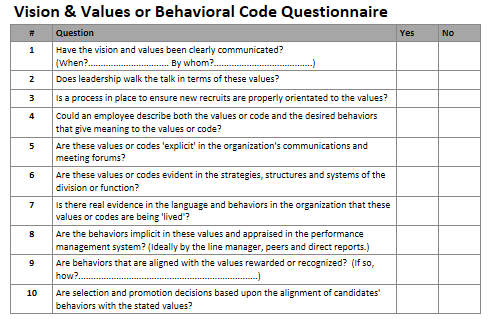

10 Essential Questions to Align Your Business Vision and Values for Success

For values to really stick, they need to be woven into the fabric of the organization.

When business changes consume excessive time and energy it’s easy to lose sight of what truly matters—your organization’s vision and values. But here’s the thing: without a clear understanding of these foundational elements, how can anyone expect to win the game? Just like a team that doesn’t know the rules can’t hope to succeed, an organization without well-communicated vision and values is destined for confusion and inefficiency.

Have the vision and values been clearly communicated? (When? By whom?)

Let’s start with the basics. Effective communication of vision and values is crucial. Imagine trying to play a game without knowing the rules. That’s what it’s like in an organization where the vision isn’t clear. According to a study by Kantabutra and Avery (2010), clear communication of vision boosts organizational performance and employee satisfaction. Think back: when was the last time your vision and values were communicated? Was it during a company-wide meeting by the CEO or in a detailed email from HR?

Citation:
Kantabutra, S., & Avery, G. C. (2010). “The power of vision: Statements that resonate with employees boost their motivation.” Leadership & Organization Development Journal, 31(1), 39-52. Link to the study

Does leadership walk the talk in terms of these values?

Next up is leadership. Their credibility hinges on actions aligning with words. It’s like a fitness instructor who never exercises—hypocrisy is easily spotted. Brown and Treviño (2006) emphasize that ethical leadership, where leaders embody the organization’s values, significantly influences employees’ behavior. So, does your leadership practice what they preach?

Citation:
Brown, M. E., & Treviño, L. K. (2006). “Ethical leadership: A review and future directions.” The Leadership Quarterly, 17(6), 595-616. Link to the study

Is there a process to ensure new recruits are properly orientated to the values?

Starting a new job is overwhelming. That’s why a solid orientation process is key. Bauer et al. (2007) found that well-structured onboarding processes help new employees stick around and perform better because they understand and align with the organization’s culture and values. Does your company ensure new hires grasp the values from day one?

Citation:
Bauer, T. N., Bodner, T., Erdogan, B., Truxillo, D. M., & Tucker, J. S. (2007). “Newcomer adjustment during organizational socialization: A meta-analytic review of antecedents, outcomes, and methods.” Journal of Applied Psychology, 92(3), 707-721. Link to the study

Could an employee describe both the values or code and the desired behaviors that give meaning to them?

It’s one thing to have values on a poster; it’s another for employees to live them. Schwartz (2013) points out that clear, codified values guide employee behavior and decision-making. If you asked a random employee, could they tell you what the company values are and what behaviors exemplify them?

Citation:
Schwartz, S. H. (2013). “An Overview of the Schwartz Theory of Basic Values.” Online Readings in Psychology and Culture, 2(1). Link to the study

Are these values or codes ‘explicit’ in the organization’s communications and meeting forums?

Making values explicit in communications keeps them top of mind. Schein (2010) emphasizes that clear communication is essential for embedding organizational culture. Are your values discussed in meetings, highlighted in newsletters, or prominently displayed in the office?

Citation:
Schein, E. H. (2010). “Organizational Culture and Leadership.” Jossey-Bass, 4th edition. Link to the book

Are these values or codes evident in the strategies, structures, and systems of the division or function?

For values to really stick, they need to be woven into the fabric of the organization. Kaplan and Norton (2004) discuss how aligning strategy with values drives performance and accountability. Are your company’s strategies, structures, and systems reflective of its core values?

Citation:
Kaplan, R. S., & Norton, D. P. (2004). “Strategy Maps: Converting Intangible Assets into Tangible Outcomes.” Harvard Business School Press. Link to the book

Is there real evidence in the language and behaviors in the organization that these values or codes are being ‘lived’?

Walking the talk is crucial. Cameron and Quinn (2011) explain that organizational culture is reflected in behaviors and norms. Do you see evidence of your values in the day-to-day language and actions within your organization?

Citation:
Cameron, K. S., & Quinn, R. E. (2011). “Diagnosing and Changing Organizational Culture: Based on the Competing Values Framework.” Jossey-Bass, 3rd edition. Link to the book

Are the behaviors implicit in these values appraised in the performance management system? (Ideally by the line manager, peers, and direct reports.)

Integrating values into performance reviews ensures consistent reinforcement. Aguinis (2013) discusses how performance management systems can be designed to evaluate and promote value-aligned behaviors. Are employees evaluated on how well they embody the company’s values?

Citation:
Aguinis, H. (2013). “Performance Management.” Pearson Education, 3rd edition. Link to the book

Are behaviors that are aligned with the values rewarded or recognized? (If so, how?)

Rewarding and recognizing value-aligned behaviors reinforces their importance. Podsakoff et al. (2000) highlight that organizational citizenship behaviors, which align with core values, can be encouraged through appropriate reward systems. Are there specific rewards or recognition programs for employees who live the company values?

Citation:
Podsakoff, P. M., MacKenzie, S. B., Paine, J. B., & Bachrach, D. G. (2000). “Organizational citizenship behaviors: A critical review of the theoretical and empirical literature and suggestions for future research.” Journal of Management, 26(3), 513-563. Link to the study

Are selection and promotion decisions based upon the alignment of candidates’ behaviors with the stated values?

Choosing and promoting based on value alignment ensures leadership consistency. Chatman and Cha (2003) discuss the importance of value congruence in selection and promotion processes. When considering candidates for promotion or hiring, are their behaviors and alignment with the company’s values taken into account?

Citation:
Chatman, J. A., & Cha, S. E. (2003). “Leading by leveraging culture.” California Management Review, 45(4), 20-34. Link to the study

Helpful Resources from Harvard Business Review

  1. How to Connect Employees to Your Company’s Purpose – Discusses the importance of communicating vision and values to connect employees to the company’s purpose.
  2. What New Team Leaders Should Do First – Highlights the significance of new leaders clearly communicating vision and values to their teams.
  3. 5 Types of Stories Leaders Need to Tell – Explores how storytelling can be used to communicate organizational values effectively.
  4. All in a Day’s Work – Emphasizes the role of leadership in communicating and garnering support for organizational vision and values.
  5. Six Components of a Great Corporate Culture – Discusses how vision and values are integral to building a strong corporate culture.
  6. Build a Culture That Aligns with People’s Values – Explains the importance of aligning corporate culture with employee values.
  7. How to Frame Your Messages for Maximum Impact – Provides insights on how leaders can effectively frame their vision to motivate teams.
  8. Leadership Is a Conversation – Highlights the necessity of open communication about organizational

Mindfulness and Leadership: Cultivating a Present and Focused Leadership Style

By being present and attentive, leaders can make more informed decisions, communicate more effectively, and foster a positive work environment.

My manager came into my office to ask for status updates on our top Continuous Improvement initiatives. While I was answering he was looking at his phone and replying to a text. This happened regularly. It was so problematic that when the leadership team gathered for our weekly operational reviews he was unable to recall most of the previously shared updates.

Have you seen or done any of these like I have – both seen and done?

  1. During Meetings: A leader might check and respond to emails or messages on their phone while simultaneously trying to participate in a meeting. This divided attention can lead to missing key points of the discussion and appearing disengaged to colleagues.
  2. Managing Team Members: Attempting to handle multiple one-on-one conversations with team members while also working on a project. This can result in not fully listening to or understanding team members’ concerns and giving incomplete or ineffective feedback.
  3. Project Management: Trying to juggle several projects at once by constantly switching back and forth between tasks without dedicating focused time to any single project. This can cause mistakes, overlooked details, and delays in progress.
  4. Decision Making: Making important decisions while simultaneously dealing with interruptions like phone calls, instant messages, or other urgent tasks. This can lead to rushed and poorly considered decisions due to a lack of thorough analysis.
  5. Communication: Writing reports or emails while attending virtual meetings. This can result in poorly written communications and missing critical information being shared during the meeting.

If that’s the case, you, like me, have not practiced being present and focused. In other words, we haven’t been practicing mindfulness.

Understanding Mindfulness in Leadership

Mindfulness, at its core, is the practice of being fully present and engaged in the moment without judgment. It involves paying attention to one’s thoughts, emotions, and sensations as they arise, fostering a deeper awareness of oneself and one’s surroundings. For leaders, mindfulness goes beyond personal well-being; it is about cultivating a leadership style that is responsive, empathetic, and focused.

Research has shown that mindful leadership can transform organizations. According to a study by the Harvard Business Review, mindfulness practices can reduce stress, improve emotional regulation, and enhance overall job performance. By being present and attentive, leaders can make more informed decisions, communicate more effectively, and foster a positive work environment.

Benefits of Mindfulness for Leaders

The benefits of mindfulness for leaders are multi-faceted, impacting both personal well-being and organizational success. Here are some key advantages:

  1. Improved Focus and Clarity: Mindfulness helps leaders maintain focus on the task at hand, reducing distractions and enhancing decision-making abilities. This clarity allows for more strategic thinking and problem-solving.
  2. Enhanced Emotional Intelligence: Mindful leaders are more in tune with their emotions and those of their team members. This heightened emotional intelligence enables better conflict resolution and stronger interpersonal relationships.
  3. Reduced Stress and Burnout: Regular mindfulness practice has been shown to decrease stress levels and prevent burnout. Leaders who manage their stress effectively can maintain their energy and enthusiasm, setting a positive example for their team.
  4. Better Adaptability: In a rapidly changing business environment, the ability to adapt is crucial. Mindfulness fosters cognitive flexibility, allowing leaders to respond to new challenges with agility and creativity.

A study published in the Journal of Applied Psychology found that leaders who practice mindfulness are more resilient and better equipped to handle the demands of their roles. This resilience is essential for navigating the complexities of modern leadership.

How to Incorporate Mindfulness into Your Leadership Style

Incorporating mindfulness into your leadership style doesn’t require significant time investment; rather, it involves small, consistent practices that can be integrated into your daily routine. Here are some practical steps to get started:

  1. Start with Self-Awareness: Begin by paying attention to your own thoughts and emotions. Set aside a few minutes each day to practice mindful breathing or meditation. Apps like Headspace or Calm can guide you through these exercises.
  2. Practice Active Listening: When engaging with team members, practice active listening. Focus fully on the speaker, avoid interrupting, and reflect back what you’ve heard. This fosters a deeper connection and understanding.
  3. Mindful Meetings: Begin meetings with a moment of mindfulness, such as a brief breathing exercise. This sets a calm tone and helps participants be more present and engaged.
  4. Encourage Mindfulness in Your Team: Promote a culture of mindfulness within your organization. Offer training sessions or resources on mindfulness practices and encourage team members to take breaks and practice self-care.

The implementation of these practices can have a profound impact on your leadership style and your organization’s culture. According to a report by the Center for Creative Leadership, leaders who integrate mindfulness into their daily routines experience improved job satisfaction and team performance.

In conclusion, mindfulness is not just a personal wellness practice; it is a powerful leadership tool. By cultivating mindfulness, leaders can enhance their focus, emotional intelligence, and resilience, leading to more effective and compassionate leadership. As the business landscape continues to evolve, mindfulness offers a timeless approach to navigating the challenges and opportunities that lie ahead.


Sources:

  1. Harvard Business Review, “Mindfulness Can Improve Strategy, Execution, and Your Bottom Line.”
  2. Journal of Applied Psychology, “The Impact of Mindfulness on Leadership Resilience.”
  3. Center for Creative Leadership, “The Benefits of Mindful Leadership for Organizational Success.”

Human-Centric Automation: Unleashing Potential and Empowering Growth

Standardizing automation involves creating consistent, repeatable processes managed by automated systems. This reduces variability, minimizes errors, and ensures high-quality outcomes.

One of the main tasks of operations leadership is enhancing efficiency and productivity. As a Production Manager, I’ve experienced firsthand the time-consuming nature of paper inspections. These manual processes often divert valuable time away from critical team interactions and strategic problem-solving.

To address this, I’ve implemented automation for our quality checks. This shift from manual paperwork to automated processes not only streamlines operations but also frees up operations leaders to focus on problem-solving and team development. Embracing automation allows us to invest more in our people and cultivate a strong organizational culture.

Table of Contents

  1. The Power of Standardization in Automation
  2. Liberating Operations Leaders to Lead and Inspire
  3. Real-World Examples
  4. Conclusion: The Human Side of Automation

The Power of Standardization in Automation

Standardizing automation involves creating consistent, repeatable processes managed by automated systems. This reduces variability, minimizes errors, and ensures high-quality outcomes. As highlighted by Harvard Business Review, “Standardizing processes is a crucial step in leveraging the full potential of automation. It creates a stable foundation upon which innovative and creative work can thrive.”

Liberating Operations Leaders to Lead and Inspire

Automating routine tasks allows operations leaders to focus on strategic activities and team development. Here’s how this transformation benefits the organization:

Enhanced Employee Engagement

Operations leaders who have the time to engage with their teams can foster stronger relationships and create a more inclusive work environment. They can better understand employees’ needs, aspirations, and challenges, leading to more personalized and effective leadership. According to Harvard Business Review, “Automation of administrative tasks frees managers to focus on coaching and development, significantly boosting team engagement.”

Building a Positive Culture

Trust, communication, and shared values form the bedrock of a strong organizational culture. Freed from administrative burdens, operations leaders can invest in team-building exercises, open forums, and one-on-one meetings, fostering a sense of belonging and shared purpose. As noted by Harvard Business Review, “Culture-building activities are essential in both traditional and hybrid work environments.”

Encouraging Innovation

With less focus on routine tasks, operations leaders can cultivate a culture of innovation. They can encourage teams to think creatively, experiment with new ideas, and take calculated risks. “When managers are freed from routine tasks, they can better support innovation and creativity within their teams,” emphasizes a Harvard Business Review article.

Personal and Professional Development

Operations leaders with more time for mentoring and coaching can significantly impact their team’s growth. By providing regular feedback, setting clear goals, and supporting professional development, they help employees reach their full potential. As stated in Harvard Business Review, “Investing in the professional development of employees not only enhances their skills but also boosts morale and job satisfaction.”

Real-World Examples

The benefits of this approach are evident in many organizations. Toyota’s adoption of standardized automation in manufacturing has enabled operations leaders to concentrate more on their teams, fostering a culture of continuous improvement and employee development.

In the tech industry, companies like Google and Microsoft use automation to handle repetitive coding and testing tasks. This allows operations leaders and senior engineers to focus on innovative projects and mentoring junior staff, promoting a collaborative and growth-oriented environment.

Conclusion: The Human Side of Automation

While automation and standardization are often viewed through the lens of efficiency and productivity, their true value lies in freeing up human potential. By automating routine tasks, operations leaders can focus on what truly matters—people. They can build stronger relationships, foster a positive culture, and drive innovation, ultimately leading to a more engaged and motivated workforce.

As we continue to embrace automation, it’s essential to recognize that its greatest benefit is not just in performing tasks but in creating time and space for human connection and growth. This balance of technology and humanity is what will drive organizations towards sustainable success.

Defeating Organizational Narcissism: Empowering Employees for a Healthier Workplace

Organizational narcissism is a significant issue that can lead to widespread dysfunction within the workplace. By understanding its characteristics and impacts, and by taking proactive steps to address it, organizations can create a healthier, more supportive environment where employees feel valued and aligned with the organization’s true values.

Navigating the modern workplace can be challenging, especially when deeper issues within the organization make you feel like you’re the problem. This is often the result of organizational narcissism—a pervasive issue where the organization prioritizes its image and success over the well-being of its employees. Let’s delve into what this means, how it manifests, and what you can do if you find yourself in such an environment.

What is Organizational Narcissism?

Imagine working in a place where the company seems obsessed with its image and achievements, often at the expense of its employees. This is what organizational narcissism looks like. In such environments, the focus is on maintaining a positive external image, sometimes to the detriment of the internal culture and employee well-being.

Signs and Symptoms

  1. Self-Centered Leadership: Leaders in narcissistic organizations often care more about their own success and public image than about the health and growth of their team. This can create a toxic environment where employees feel unsupported and undervalued.
  2. Values Misalignment: There’s a stark difference between what the organization claims to value and what it actually practices. This disconnect can leave employees feeling confused and frustrated when their efforts to align with the company’s stated values go unrecognized or are even contradicted by leadership behaviors.
  3. Poor Management Practices: Micromanagement, lack of support, and constant criticism are common in narcissistic organizations. Such practices stifle creativity and make employees feel like they can never do anything right.
  4. Toxic Culture: The overall atmosphere in a narcissistic organization can be incredibly negative. Employees might face unrealistic expectations and a pervasive blame culture, leading to high turnover rates and widespread dissatisfaction.

The Emotional Toll on Employees

Working in a narcissistic organization can take a serious toll on your mental and emotional well-being. Here’s how:

  • Self-Doubt and Blame: When problems arise, you might be led to believe it’s your fault, even if the issues are systemic. This constant self-doubt can erode your confidence and make you question your abilities.
  • Decreased Job Satisfaction: Misalignment between your personal values and the organization’s practices can make you feel disconnected and unfulfilled, leading to disengagement.
  • Mental Health Struggles: The stress of navigating such a toxic environment can result in anxiety, depression, and burnout.

How to Recognize and Address Organizational Narcissism

It’s important to recognize the signs of organizational narcissism and take steps to protect your well-being. Here are some strategies:

  1. Promote Empathy and Support: If you’re in a leadership position, encourage an empathetic approach that prioritizes the well-being of your team. If you’re an employee, look for ways to support your colleagues and foster a sense of community.
  2. Align Values with Practices: Push for transparency and accountability in how the organization lives up to its stated values. This can help rebuild trust and ensure that the company’s practices reflect its principles.
  3. Foster Open Communication: Advocate for open and honest communication channels where employees can voice their concerns without fear of retribution. This can help address issues before they escalate and create a more supportive environment.
  4. Provide Constructive Feedback: Shift the culture from one of criticism to one of constructive feedback. Helping employees grow by recognizing their strengths and areas for improvement in a supportive manner can make a big difference.

Conclusion

Organizational narcissism is a significant issue that can lead to widespread dysfunction within the workplace. By understanding its characteristics and impacts, and by taking proactive steps to address it, organizations can create a healthier, more supportive environment where employees feel valued and aligned with the organization’s true values.

If you find yourself in a narcissistic organization, remember: the problem is not you. Understanding the dynamics at play can help you navigate the situation more effectively and take steps to protect your mental and emotional well-being.

For further reading on the impact of organizational narcissism and strategies to address it, consider exploring these sources:

  1. Is Your Leadership Creating Silos? – Dranitsaris-Hilliard
  2. Tune in, Breakdown, and Reboot – CBS Research Portal
  3. Narcissism in the Workplace: Strategies for Management and Co-workers
  4. Organizational Narcissism and Defensive Routines – LinkedIn
  5. When ‘Me’ Trumps ‘We’: Narcissistic Leaders and the Cultures They Create

Transformational Leadership: Inspiring Change in Your Team

One of the most impactful leadership styles that has gained prominence is transformational leadership. This approach not only drives change but also inspires and motivates teams to achieve their highest potential. In this blog post, we’ll delve into the essence of transformational leadership, explore the key characteristics of transformational leaders, and provide actionable steps on how to implement this leadership style within your organization.

What is Transformational Leadership?

Transformational leadership is a leadership style where leaders work with their teams to identify needed change, create a vision to guide the change through inspiration, and execute the change in tandem with committed members of the group. This style of leadership is about transforming and improving team performance, culture, and motivation.

According to James MacGregor Burns, who first introduced the concept, transformational leadership is “a process where leaders and their followers raise one another to higher levels of morality and motivation” . This type of leadership is not just about making changes but about inspiring and uplifting the entire team to work towards a common goal.

Characteristics of Transformational Leaders

Visionary

Transformational leaders have a clear vision of the future. They articulate this vision passionately and persuasively, ensuring that the entire team is aligned and motivated to achieve it. As Warren Bennis once said, “Leadership is the capacity to translate vision into reality” . A transformational leader’s vision acts as a compass, guiding the team through challenges and towards success.

Inspirational Motivation

These leaders inspire and motivate their team members. They set high expectations and encourage their followers to exceed them. By fostering an environment of enthusiasm and commitment, transformational leaders ignite passion and drive within their teams. This results in higher productivity and morale.

Intellectual Stimulation

Transformational leaders challenge the status quo and encourage innovation and creativity. They promote an environment where team members feel safe to express new ideas and take calculated risks. This intellectual stimulation leads to continuous improvement and breakthrough solutions.

Individualized Consideration

Transformational leaders pay close attention to each team member’s needs, aspirations, and development. They act as mentors and coaches, providing personalized support and encouragement. By acknowledging and valuing individual contributions, these leaders foster a culture of respect and trust.

How to Implement Transformational Leadership

Develop a Clear Vision

Start by defining a clear and compelling vision for the future. This vision should be aligned with the organization’s goals and values. Communicate this vision effectively to your team, ensuring that everyone understands and is committed to achieving it. Use storytelling and vivid descriptions to make the vision tangible and relatable.

Foster an Inspirational Environment

Create an environment that inspires and motivates your team. Recognize and celebrate achievements, both big and small. Set high expectations and provide the necessary support for your team to meet and exceed them. Encourage a positive and optimistic atmosphere where everyone feels valued and empowered.

Encourage Innovation and Creativity

Promote a culture of innovation by encouraging your team to think outside the box. Provide opportunities for brainstorming and creative problem-solving. Reward innovative ideas and successful risk-taking. Create a safe space where team members can experiment without fear of failure.

Provide Individualized Support

Pay attention to the unique needs and strengths of each team member. Offer personalized coaching and mentoring to help them grow and develop. Provide regular feedback and recognition to acknowledge their contributions. By showing genuine care and concern for your team members, you build strong, trusting relationships.

Lead by Example

As a transformational leader, your actions set the tone for the entire team. Demonstrate the values and behaviors you want to see in your team. Show commitment, integrity, and resilience in the face of challenges. By leading by example, you inspire your team to follow suit and embody the same qualities.

Build Strong Relationships

Invest time in building strong, trust-based relationships with your team members. Foster open and honest communication, where team members feel comfortable sharing their thoughts and concerns. Show empathy and understanding, and be approachable and accessible. Strong relationships are the foundation of a cohesive and high-performing team.

Continuous Learning and Development

Promote a culture of continuous learning and development. Encourage your team to seek out new knowledge and skills, and provide opportunities for professional growth. Lead by example by demonstrating a commitment to your own learning and development. This mindset of continuous improvement drives innovation and excellence within the team.

Monitor and Adapt

Regularly assess the effectiveness of your leadership approach and make adjustments as needed. Solicit feedback from your team and be open to constructive criticism. Stay attuned to changes in the organizational landscape and be ready to adapt your strategies accordingly. Flexibility and responsiveness are key to sustaining transformational leadership.

Conclusion

Transformational leadership is a powerful approach that can drive significant positive change within your team and organization. By embodying the characteristics of transformational leaders and implementing the strategies outlined above, you can inspire and motivate your team to achieve their highest potential. Stay committed to continuous improvement and adapt your leadership style to meet the evolving needs of your team and organization.

References:

  1. Burns, J. M. (1978). Leadership. Harper & Row.
  2. Bennis, W. (2003). On Becoming a Leader. Basic Books.
  3. Forbes. (2021). The Impact of Transformational Leadership on Organizational Performance.

Igniting the Flame Within: Mandy Cogan on Being a Self-Motivated Leader

Being a self-motivated leader, according to Cogan, is about “pushing oneself” and nurturing a mindset that thrives on achievement, learning, and resilience. These leaders set distinct goals, radiate positivity, and view challenges as opportunities for growth.

In the demanding, ever-changing landscape of leadership, the capacity to ignite one’s own drive and inspire others is paramount. Today, we turn to the insights of a colleague of mine – Mandy Cogan, who I interviewed for this blog post after receiving a social media post on self-motivation. I was struck by what motivated them to pause, review, and even forward it on to interested parties. What you read next is the result of a short interview and insights gained by their answers.

The DNA of Self-Motivation in Leadership

Being a self-motivated leader, according to Cogan, is about “pushing oneself” and nurturing a mindset that thrives on achievement, learning, and resilience. These leaders set distinct goals, radiate positivity, and view challenges as opportunities for growth. They epitomize self-care and are fueled by their passion, creating an environment that naturally inspires their teams.

These leaders embody resilience, demonstrating that setbacks are merely stepping stones on the path to success. They have a clear vision that fuels their motivation and becomes a guiding light for their team.

The Power of Self-Motivation on Team Dynamics

Cogan emphasizes that self-motivated leaders are catalysts for their teams. Their drive is infectious, inspiring enthusiasm and fostering a culture of motivation and productivity. They set clear goals, nurture a positive environment, provide constructive feedback, and promote continuous learning.

Recognizing the value of autonomy, these leaders empower their team members, boosting their motivation. They exemplify resilience, showing that challenges are part of the journey to success. By sharing a clear vision, they ensure every team member understands their role in achieving the collective goal.

Recognizing Burnout: The Unseen Enemy

However, even the most motivated leaders can face burnout. Recognizing the signs is crucial to preventing total burnout. Symptoms may include chronic fatigue, lack of motivation, irritability, cognitive issues, loss of satisfaction, physical symptoms, neglecting responsibilities, isolation, emotional exhaustion, and decreased performance. When these signs persist, seeking professional help is essential.

Embracing the Power of External Motivation

While self-motivation is a potent force, Cogan underscores the significance of external motivation. She reminds us that we can’t force inspiration, but we can create an environment that offers potential sparks of motivation for those who might need it. As she puts it, “You can share something positive dozens and dozens of times but in the end, only one of them could have been heard fully. You just never know what the other person or people needed to hear that day.”

Leaders, therefore, have a role in harnessing the power of external motivators, providing those needed nudges for those who may be externally motivated or lacking in motivation.

Wrapping Up

Being a self-motivated leader, as Mandy Cogan beautifully illustrates, is about more than propelling oneself forward; it’s about inspiring others to join the journey. By fostering a motivational culture, recognizing the signs of burnout, and utilizing the power of external motivators, you can unlock the full potential of your team. Remember, the key to effective leadership lies in the harmony of self-drive and the capacity to ignite that drive in others.

I Have All The Data But I Don’t Understand

By recognizing the differences and prioritizing insights and root causes, leaders can enhance their understanding of daily operations. Embracing strategies such as gemba walks, collaboration, data analytics, continuous learning, and mentoring relationships empowers leaders to unlock hidden potential and drive transformative change.

In the fast-paced world of manufacturing, production leaders face a constant influx of data. However, simply acquiring data is not enough to drive operational excellence. To make informed decisions and identify root causes, leaders must strive for a deep understanding of daily operations. In this blog post, we will explore the critical differences between data acquisition and true understanding. Additionally, we will provide practical strategies for manufacturing leaders to enhance their comprehension of daily operations.

1. Overwhelming Data: A Barrier to Effective Processing

In today’s manufacturing landscape, we are inundated with more data than we can effectively process. The sheer volume of information can overwhelm leaders, making it challenging to extract meaningful insights. Leaders must recognize that data alone does not equate to understanding. Instead, it serves as a foundation for deeper analysis and interpretation.

2. Grasping the Root Cause: The Key to Operational Constraint

To overcome operational challenges, leaders must fully understand the problems they encounter. Superficial knowledge of symptoms or surface-level analysis is insufficient. True understanding requires delving into the root cause and uncovering the underlying factors that contribute to constraints or inefficiencies. By addressing the root cause, leaders can implement targeted solutions and drive sustainable improvements.

3. Data vs. Understanding: Bridging the Gap

Recognizing the distinction between acquiring data and reaching a comprehensive understanding is crucial. Mere data acquisition involves collecting information without necessarily gaining insights. True understanding, on the other hand, involves analyzing data, recognizing patterns, and contextualizing the information. It is a cognitive process that leads to meaningful comprehension and informed decision-making.

4. Differentiating Data Acquisition from Understanding

To shed light on the disparities between data acquisition and understanding, let’s explore the key differences:

  • Depth of Analysis: Data acquisition involves collecting information at a surface level, while understanding requires diving deeper, analyzing patterns, and uncovering insights.
  • Contextual Understanding: Data acquisition may provide isolated facts, whereas understanding involves comprehending the context, interrelationships, and broader implications.
  • Interpretation and Synthesis: Understanding necessitates interpretation, synthesis, and connecting the dots between data points, enabling leaders to derive comprehensive insights.
  • Application and Problem-Solving: Data acquisition lacks the ability to apply knowledge to practical situations while understanding empowers leaders to address complex problems effectively.
  • Decision-Making: Understanding enables leaders to make informed decisions by considering various factors, weighing consequences, and assessing the long-term impact.

5. Strategies for Improving Operational Understanding

Manufacturing leaders can enhance their understanding of daily operations by implementing the following strategies:

  • Embrace Gemba Walks: Engage in regular visits to the shop floor to observe operations firsthand, ask questions, and gain a deeper understanding of processes and challenges.
  • Foster Cross-Functional Collaboration: Encourage collaboration between different departments and teams to gain a holistic view of operations, leverage diverse perspectives, and foster knowledge sharing.
  • Invest in Data Analytics: Utilize advanced data analytics tools and techniques to analyze large datasets, identify trends, and uncover meaningful insights that can drive informed decision-making.
  • Continuous Learning: Encourage a culture of continuous learning by providing training opportunities, promoting knowledge-sharing sessions, and encouraging personal development.
  • Develop Mentoring Relationships: Establish mentorship programs where experienced leaders can guide and share their insights with emerging leaders, facilitating knowledge transfer and deepening understanding.

Conclusion

In manufacturing leadership, true understanding surpasses mere data acquisition. It drives effective decision-making and operational excellence. By recognizing the differences and prioritizing insights and root causes, leaders can enhance their understanding of daily operations. Embracing strategies such as gemba walks, collaboration, data analytics, continuous learning, and mentoring relationships empowers leaders to unlock hidden potential and drive transformative change. With a deep understanding, manufacturing leaders navigate complexities with confidence, achieving lasting success.

The Power of Admitting Mistakes: A Key to Effective Leadership

Admitting mistakes is a crucial aspect of effective leadership. It demonstrates humility, authenticity, and accountability, which are vital traits for establishing trust, fostering collaboration, and promoting continuous learning within a team.

A colleague recently shared an intriguing story about the culture at their workplace, which was significantly impacted by their direct manager. This manager was quick to publicly acknowledge their direct reports’ mistakes during review meetings but never admitted their own, even when they were well-known and created problems for the entire team. This situation highlights the crucial role that being willing to admit mistakes plays in leading teams and fostering a positive work environment. In this blog post, we’ll discuss the importance of admitting mistakes as a leader, the potential consequences of not doing so, and how leaders can benefit from publicly acknowledging their errors.

The Importance of Admitting Mistakes:

Admitting mistakes is a crucial aspect of effective leadership. It demonstrates humility, authenticity, and accountability, which are vital traits for establishing trust, fostering collaboration, and promoting continuous learning within a team. When leaders openly acknowledge their mistakes, they set a positive example for their team members and create an environment where everyone feels comfortable admitting and learning from their own errors.

The Consequences of Not Admitting Mistakes:

When leaders fail to admit their mistakes, several negative consequences can arise:

  1. Eroded trust and credibility: Team members may question the leader’s integrity and fairness, reducing their willingness to follow the leader’s guidance.
  2. Hindered psychological safety: A lack of openness about mistakes can stifle creativity, innovation, and open communication within the team.
  3. Damaged team morale: Team members may feel undervalued, demotivated, and resentful, impacting their job satisfaction and productivity.
  4. Impeded personal and team growth: Without acknowledging and learning from mistakes, leaders miss out on opportunities for self-improvement, and they hinder the development of a growth mindset within their team.
  5. Weakened accountability and responsibility: When a leader does not model accountability, team members may feel less inclined to take responsibility for their own actions.
  6. Strained relationships: A leader’s unwillingness to admit mistakes can lead to a breakdown in collaboration and communication, which is crucial for a team’s success.

The Benefits of Publicly Acknowledging Mistakes:

  1. Enhances leadership effectiveness: By publicly admitting their mistakes, leaders set a positive example for their team, demonstrating the importance of taking responsibility for one’s actions and continuously learning and growing.
  2. Strengthens relationships: Publicly acknowledging mistakes can create stronger relationships between the leader and their team, fostering a culture of understanding, empathy, and mutual support.
  3. Increases accountability and responsibility: When leaders model accountability for their own mistakes, team members are more likely to take responsibility for their actions, leading to increased ownership and commitment to the team’s goals and objectives.

In conclusion, being willing to admit mistakes is an essential aspect of effective leadership. By embracing vulnerability and learning from errors, leaders can foster trust, promote a growth mindset, and create a psychologically safe work environment. The consequences of not admitting mistakes can be detrimental to both personal and team development, but by publicly acknowledging their errors, leaders can set a positive example, strengthen relationships, and increase accountability within their teams.

Avoiding Guesspectations: Setting Clear Expectations for Team Success

Guesspectations can lead to misaligned priorities, inefficiencies, and frustration within the team. To help teams perform effectively and meet objectives, it’s crucial for managers to avoid guesspectations by providing clear expectations and setting their team up for success.

Introduction

A key component of successful team management is setting clear expectations for team members. However, when managers fail to communicate these expectations effectively, they inadvertently create a situation we can call “guesspectations.” In this scenario, team members are left to guess or blindly work towards meeting goals without a clear understanding of what is expected of them. Guesspectations can lead to misaligned priorities, inefficiencies, and frustration within the team. To help teams perform effectively and meet objectives, it’s crucial for managers to avoid guesspectations by providing clear expectations and setting their team up for success.

The Results of Guesspectations

  1. Misaligned priorities: When team members are left to guess their goals or objectives, they may develop different interpretations of what’s most important or expected of them. This can result in team members focusing on tasks that may not contribute significantly to the overall goals or ignoring critical tasks altogether. Misaligned priorities can create confusion and hinder the team’s ability to collaborate effectively, making it challenging to achieve common objectives.
  2. Inefficiencies: Guesspectations can lead to inefficiencies as team members may work on tasks or projects without a clear understanding of their relevance or desired outcomes. They may waste time and resources on tasks that do not align with the team’s or organization’s goals, or they may need to redo their work when expectations are later clarified. Inefficiencies can slow down progress, increase costs, and negatively impact the team’s productivity and performance.
  3. Frustration: The ambiguity and uncertainty resulting from guesspectations can cause frustration among team members. They may feel lost or unsupported, unsure of how their work contributes to the overall goals. This frustration can lead to decreased job satisfaction, lower morale, and a decline in motivation. Frustrated team members may disengage from their work or become less committed to the team’s success, which can harm overall team dynamics and effectiveness.

Identifying A Culture of Known Expectations

It can be challenging to determine whether people truly understand what is expected of them, but there are some signs and behaviors that may indicate their level of understanding. When team members have a clear understanding of expectations, they may exhibit the following behaviors:

  1. Proactivity and independence: Team members who understand their responsibilities and goals are more likely to take the initiative and work independently without constant supervision. They will show confidence in making decisions and addressing tasks related to their roles.
  2. Efficient task prioritization: When people know what is expected of them, they can better prioritize their tasks and focus on the most important objectives. This leads to efficient use of time and resources and progress towards meeting team goals.
  3. Constructive communication: Team members who are clear about expectations will be able to articulate their roles, responsibilities, and progress effectively during team meetings or one-on-one discussions. They may also be more inclined to ask clarifying questions and provide constructive feedback to ensure alignment with team objectives.
  4. Collaboration and teamwork: Clear expectations foster a sense of shared responsibility and encourage team members to collaborate effectively. When individuals understand their roles and how they contribute to the team’s overall success, they are more likely to work together, share ideas, and help each other overcome challenges.
  5. Timely completion of tasks: People who know what is expected of them generally complete their tasks on time and within the specified parameters. They are more likely to be accountable for their work and meet deadlines.
  6. Higher motivation and engagement: When expectations are clear, team members are more likely to be motivated and engaged in their work. They will have a better understanding of how their efforts contribute to the team’s success and be more committed to achieving goals.
  7. Adaptability and problem-solving: When team members know what is expected of them, they can better identify potential issues and develop solutions to overcome challenges. They are more likely to be proactive in addressing obstacles and adapting to changes in the work environment.

That brings us to the next issue – How to Avoid Leading with Guesspectations

Turning Guesspectations into Expectations

  1. Clear communication

Effective communication is at the core of avoiding guesspectations. Managers should communicate goals, objectives, and expectations openly, clearly, and consistently to all team members. Regular meetings, written documentation, and one-on-one discussions can be useful tools for communication. Encouraging team members to ask questions and clarify any points of confusion fosters a culture of openness and promotes better understanding. Managers should also be receptive to feedback, which can provide valuable insights into potential areas of improvement.

  1. SMART goals

Establishing specific, measurable, achievable, relevant, and time-bound (SMART) goals for your team provides a clear framework that helps team members understand what is expected of them. Involving team members in the goal-setting process fosters buy-in and commitment to achieving these goals. This approach increases focus, motivation, and productivity by providing a clear roadmap for success.

  1. Regular feedback and support

Providing ongoing feedback, support, and guidance to team members is essential for avoiding guesspectations. Regular check-ins and performance reviews can help ensure that everyone is on track and any issues or challenges are addressed promptly. Constructive feedback and recognition of successes can boost motivation and help team members feel valued and appreciated. Additionally, offering resources and opportunities for professional development can further enhance team performance and personal growth.

Conclusion

By implementing these key strategies, managers can minimize the risk of guesspectations and their negative consequences, creating a supportive work environment and promoting effective collaboration and performance within the team. Clear communication, SMART goal-setting, and regular feedback and support not only prevent confusion and frustration but also set the foundation for a successful and high-performing team. Ultimately, avoiding guesspectations can contribute to better team dynamics, increased job satisfaction, and improved