Daily Management System

his allowed everyone to track their performance and make improvements where necessary. We also provided regular feedback to our hourly team members and operators on their performance and how they were contributing to the overall success of the business.

Using Visual Tools to Manage Your Team, Department, or Organization

I am excited as we have rolled out our new Daily Management System and Portland Bottling Company., As a manager in the beverage industry, it’s essential to have a clear and concise visual management system in place. This system should be updated regularly with Key Performance Indicators (KPIs) to ensure that everyone on the team is on the same page. The purpose of a visual management board is to provide everyone with a comprehensive overview of the business’s performance and to promote transparency and accountability, and teamwork.

In this blog post, we will be discussing how we updated our visual management board with KPIs, and how we got our hourly team members and operators involved in the process.
Step 1: Identifying the Key Performance Indicators

The first step in updating our visual management board was to identify the KPIs that would be the most impactful for our team. We considered a range of factors, including production efficiency, product quality, and customer satisfaction, to determine which KPIs would be the most relevant. All team members got to weigh in on the discussion. The critical point is that if your hourly team members are going to “own” the board, they have to be involved in the creation process.

Step 2: Setting Up the Visual Management Board

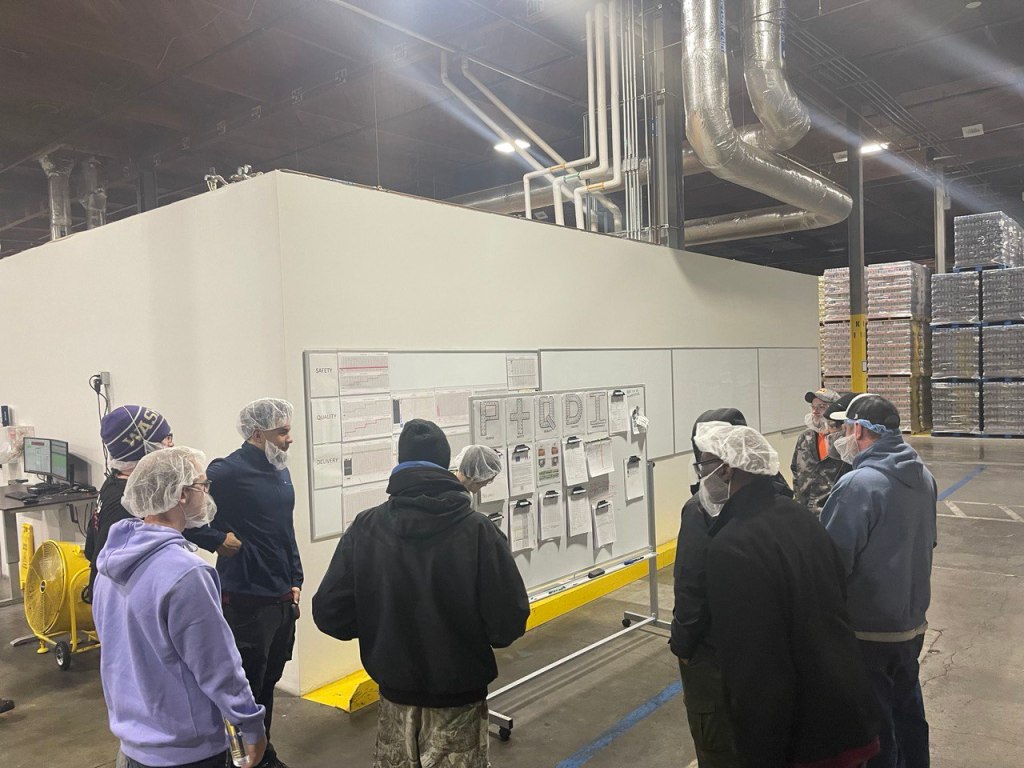
We chose to go with a basic board but with a twist or two on it.

  1. Since we truly believe that our People are our greatest asset – that KPI comes first.
  2. Secondly, we chose Safety as that easily coincides with taking care of our team members and ensuring compliance with training requirements.

Step 3: Involving the Hourly Team Members and Operators
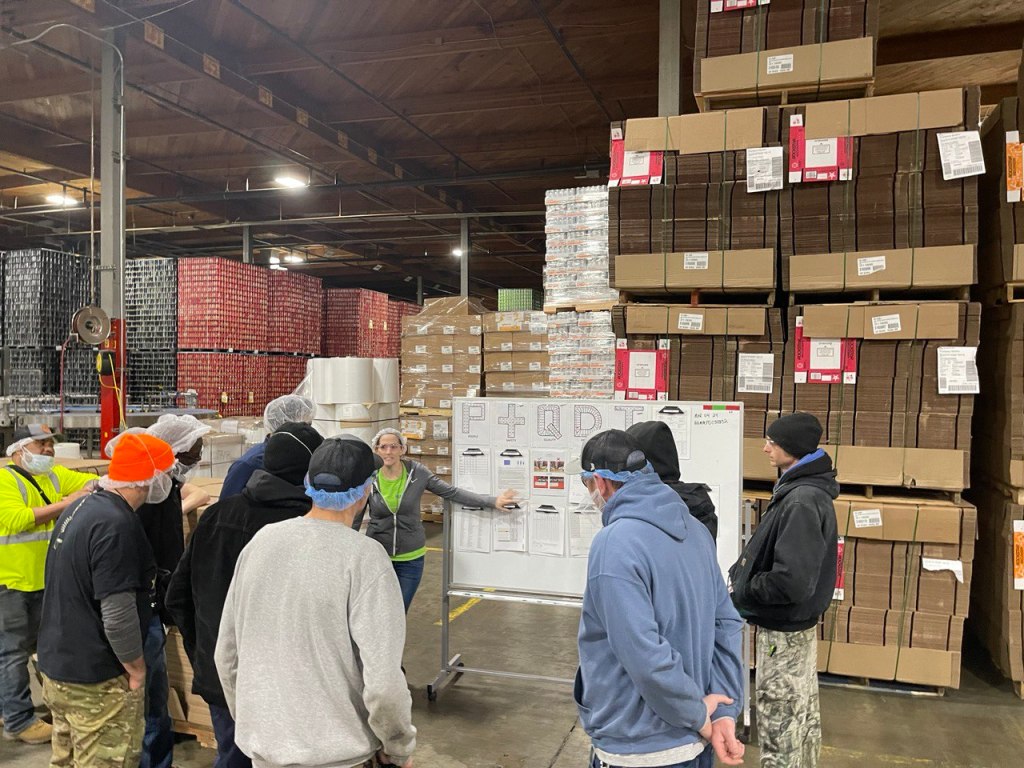
Once we had identified some of the KPIs, we set up a visual management board in our production office area. We held multiple training sessions with multiple departments and even enjoyed “mock” meetings where we got to do a meeting and offer feedback and support to each other. It actually turned out to be quite fun.

The next step was to get our hourly team members and operators involved in the process. We organized a team meeting and invited everyone to discuss the new visual management board. During the meeting, we explained the purpose of the board and how the KPIs would be used to improve production efficiency and customer satisfaction. We also invited everyone to suggest additional KPIs that they believed would be beneficial.

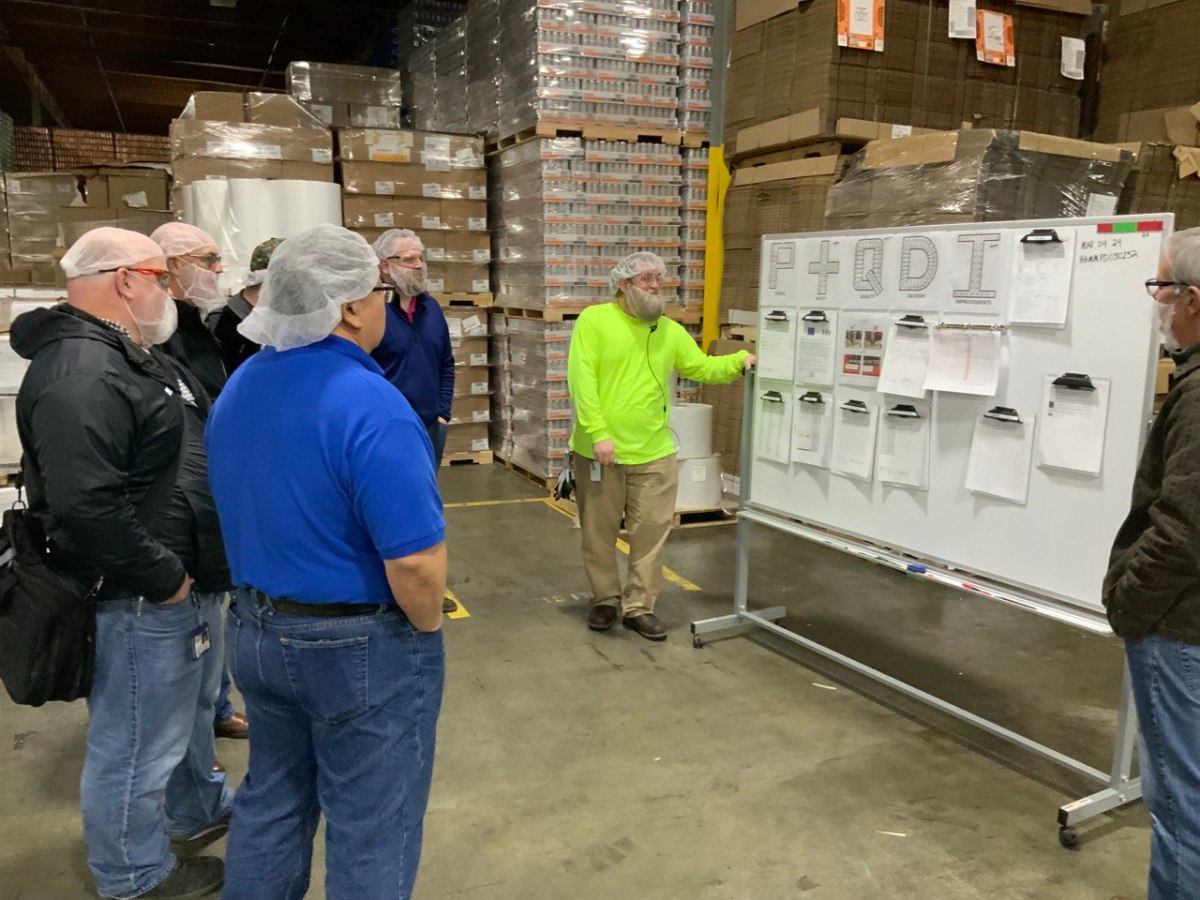
As we implemented the system live, the boards were placed as close to the machines as possible, where they could be easily seen by everyone on the team. We used color-coded charts and graphs to display the KPIs, which made it easy for everyone to understand the data.

Step 4: Updating the Visual Management Board Regularly

We updated the visual management board regularly, ensuring that the KPIs were accurate and up-to-date. This allowed everyone to track their performance and make improvements where necessary. We also provided regular feedback to our hourly team members and operators on their performance and how they were contributing to the overall success of the business.

Step 5: Celebrating Success

Finally, we celebrated success by recognizing the achievements of our hourly team members and operators. This helped to promote a positive and motivated work environment, and it encouraged everyone to continue working towards our shared goals.

Step 6: Management Gemba Walks
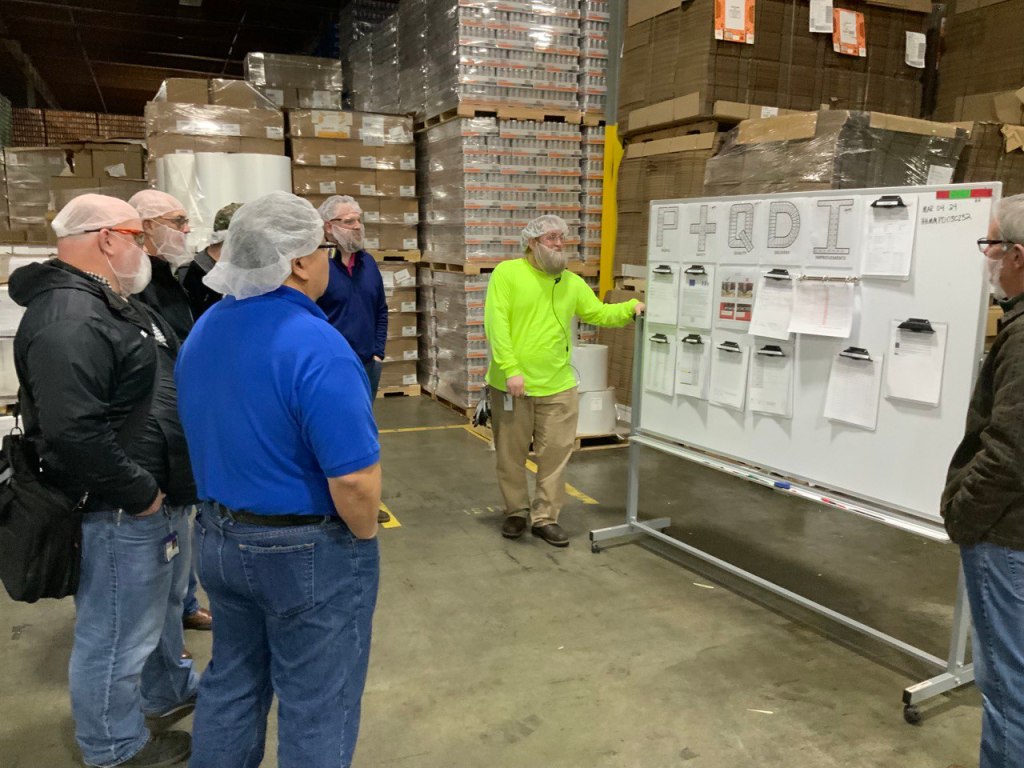
Don’t forget about your Management Gemba Walks.

The purpose of management Gemba walks in a visual management system is to enable managers to observe and evaluate how work is being performed in the workplace. Gemba is a Japanese term that means “the real place” or “the place where work is done.” Gemba walks are a management technique that involves going to the actual location where work is being performed, observing the process, and talking to the employees who are performing the work.

In the context of a visual management system, Gemba walks allow managers to see how the system is functioning in practice, identify any issues or problems, and make necessary improvements. Visual management systems are designed to make information about processes, performance, and quality visible and easily understandable, so Gemba walks can be used to ensure that the information being presented is accurate and up-to-date.

Our managers do their formal Gemba twice a week to observe as close to the machine as possible. By actively engaging with employees and observing the process in action, managers can gain a deeper understanding of how work is being done, identify any inefficiencies or areas for improvement, and provide feedback to the team. Gemba walks also provide an opportunity for managers to build relationships with employees, demonstrate their support for the team, and reinforce the importance of continuous improvement

In conclusion, updating our visual management board with KPIs has been a valuable process. It has helped us to promote collaboration, teamwork, and a shared understanding of our goals. By involving our hourly team members and operators in the process, we have been able to improve production efficiency, product quality, and customer satisfaction.
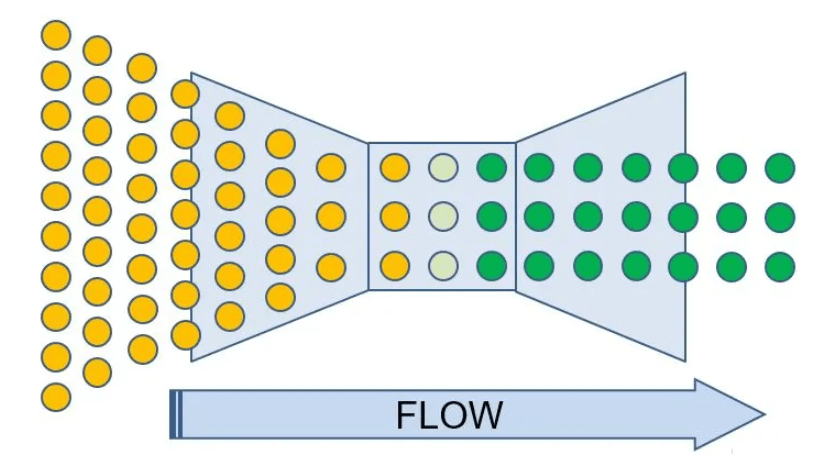
Theory of Constraints Training Pack

Participants in TOC training programs may also learn about how to apply these concepts to real-world business situations, including how to identify and eliminate bottlenecks, how to set and achieve goals, and how to measure and improve organizational performance.

The Theory of Constraints (TOC) is a management philosophy developed by Eliyahu M. Goldratt that is designed to help organizations maximize their profits by identifying and eliminating bottlenecks that prevent them from reaching their full potential. It is based on the idea that every organization has a limited number of resources, such as time, money, and personnel, and that these resources are constrained by certain factors that limit their ability to produce results. By identifying and addressing these constraints, organizations can increase their efficiency and productivity and achieve their desired outcomes.

Training in TOC typically involves learning about the principles and tools of the theory, including the Five Focusing Steps, the Thinking Processes, and the Drum-Buffer-Rope (DBR) scheduling system. Participants in TOC training programs may also learn about how to apply these concepts to real-world business situations, including how to identify and eliminate bottlenecks, how to set and achieve goals, and how to measure and improve organizational performance.

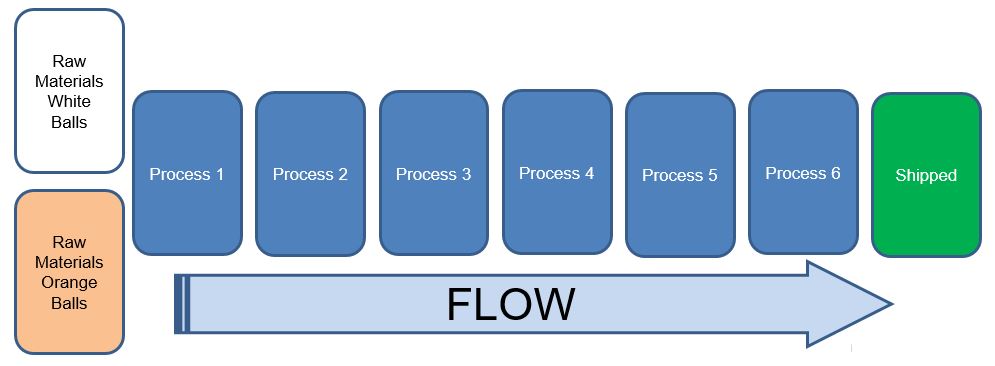
Below is a training deck/game created to help you – the Lean Leader – train your team on the identification of bottlenecks and how to address the constraints as you move closer to optimizing your production or manufacturing process.

This training kit is designed to give your team a hands-on experience with random process variation.

Supplies / Materials

  • 3 Sets of Dice
    • 1 White – to match white ping pong balls
    • 1 Orange – to match orange ping pong balls
    • 1 Blue – to represent Overtime
  • 9 Containers or bins
    • 1 for each of the 6 processes
    • 1 for the raw materials (before process 1)
    • 1 to receive “shipped” ping pong balls
  • 2 Flip chart sheets
    • 1 to draw the “Shipped” KPI and MTD Variance KPI
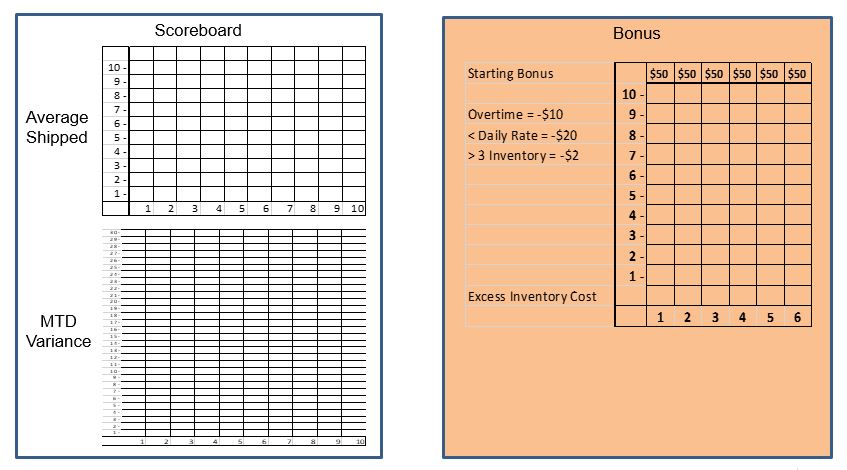
    • 1 to track “Bonus” points

Participants – for Role Play

  • 6 Supervisors – Manage each operation (bowl)
  • 1 General Manager – Controls cost through overtime and supermarket (inventory) approvals
  • 2 Manufacturing Managers – each one manages 3 supervisors
  • 1 Customer – responds positively or negatively to throughput/delivery of each roll

Game Setup

  • 2 Bins of Raw Materials (ping pong balls)
  • 6 Stations = 1 Person per 1 Process Container + 1 Die
  • 3 Balls (Beginning Inventory) at each Process (in each bowl to start)
  • 6 Flip Chart Sheets (or printed 11×17)  – 5 Scoreboards and 1 Bonus

The accompanying Excel sheet contains printable examples on 11″x17″ size paper.

Game Play – 7 Rounds (10 rolls each process) + Bonus Round

Round 1 – Basic

Rules

  1. Each person will roll their die 1 x 10
  2. The number rolled represents production for the day
  3. They will pass that number of balls to the next process −If there are not enough balls in their inventory then they pass only the number available
  4. The scorekeeper will write down the actual shipments (chart 1) and the cumulative shipments (chart 2)

Observations

  1. Note the random variation in inventory levels
  2. Note the strain on flow through the value stream
  3. Note the inconsistency of shipments (chart 1)
  4. Note the increasing variance to target (chart 2)

Round 2 – Improvement #1 – Add 1 Inventory Supermarket

Rules

  1. The team will decide (majority wins) to place one supermarket of inventory( 3 days worth or 9 balls) at a strategic location between any two processes
  2. Each person will roll their die 1 x 10
  3. The number rolled represents production for the day
  4. They will pass that number of balls to the next process −If there are not enough balls in their inventory then they pass only the number available
  5. The scorekeeper will write down the actual shipments (chart 1) and the cumulative shipments (chart 2)

Observations

  1. Note the reduction of variation near the supermarket
  2. Note the strain on flow through the value stream
  3. Note the inconsistency of shipments (chart 1)
  4. Note the increasing variance to target (chart 2)

Round 3 – Firefighting #1 – Add Labor Sharing

Rules

  1. Setup the game the same as the previous round
  2. Each person will roll their die 1 x 10
  3. The number rolled represents production for the day
  4. They will pass that number of balls to the next process
    • If there are not enough balls in their inventory then they pass only the number available
    • A process that has excess inventory can choose to not roll a turn and loan labor (forfeit their roll and pass their die to another process) that needs an additional roll to be able to move more inventory
  5. The scorekeeper will write down the actual shipments (chart 1) and the cumulative shipments (chart 2)

Observations

  1. Note the reduction of variation near the supermarket
  2. Note the strain on flow through the value stream
  3. Note the inconsistency of shipments (chart 1)
  4. Note the increasing variance to target (chart 2)

Round 4 – Firefighting #2 – Add Overtime (3 Blue Die – Max per round)

Rules

  1. Setup the game the same as the previous round
  2. Each person will roll their die 1 x 10
  3. The number rolled represents production for the day
  4. They will pass that number of balls to the next process
    • If there are not enough balls in their inventory then they pass only the number available
    • If there are not enough balls in their inventory then they pass only the number available
    • Another process that has excess inventory can choose to not roll and loan labor (forfeit their roll and pass their die to another process) that needs to move more inventory
  5. If the roll results in a number too low, the participant can request (from the manager) to use an available Overtime roll to make the production rate for the round
    1. There is a maximum of 3 Overtime rolls per round
  6. The scorekeeper will write down the actual shipments (chart 1) and the cumulative shipments (chart 2)

Round 5 – Merit / Bonus Round

Rules

  1. Same as the previous Round
  2. Each person starts out with a $50 Bonus
  3. The scorekeeper subtracts the following penalties from each person during the round:
    • Overtime – $10.00
    • Not hitting Daily Rate – $20.00
    • Greater than 3 balls of ending inventory – $1.00
  4. The winner is the player with the most bonus points

Observations

  1. What changed?
  2. Did anything improve?
  3. Is Labor sharing or Overtime sustainable or ideal?

Summary

This training event is an opportunity to review the key concepts and principles of TOC and how they can be applied in participants’ organizations.

At the conclusion of the training, participants should have a clear understanding of the TOC philosophy and how it can be used to identify and eliminate bottlenecks that prevent organizations from reaching their full potential. They should also have the knowledge and skills to set and achieve goals, measure and improve organizational performance, and apply the TOC tools and techniques to real-world business situations.

Participants may have the opportunity to share their thoughts and experiences with the TOC philosophy and how they plan to use it in their organizations. They may also have the opportunity to ask questions and seek guidance from the instructor and other participants.