
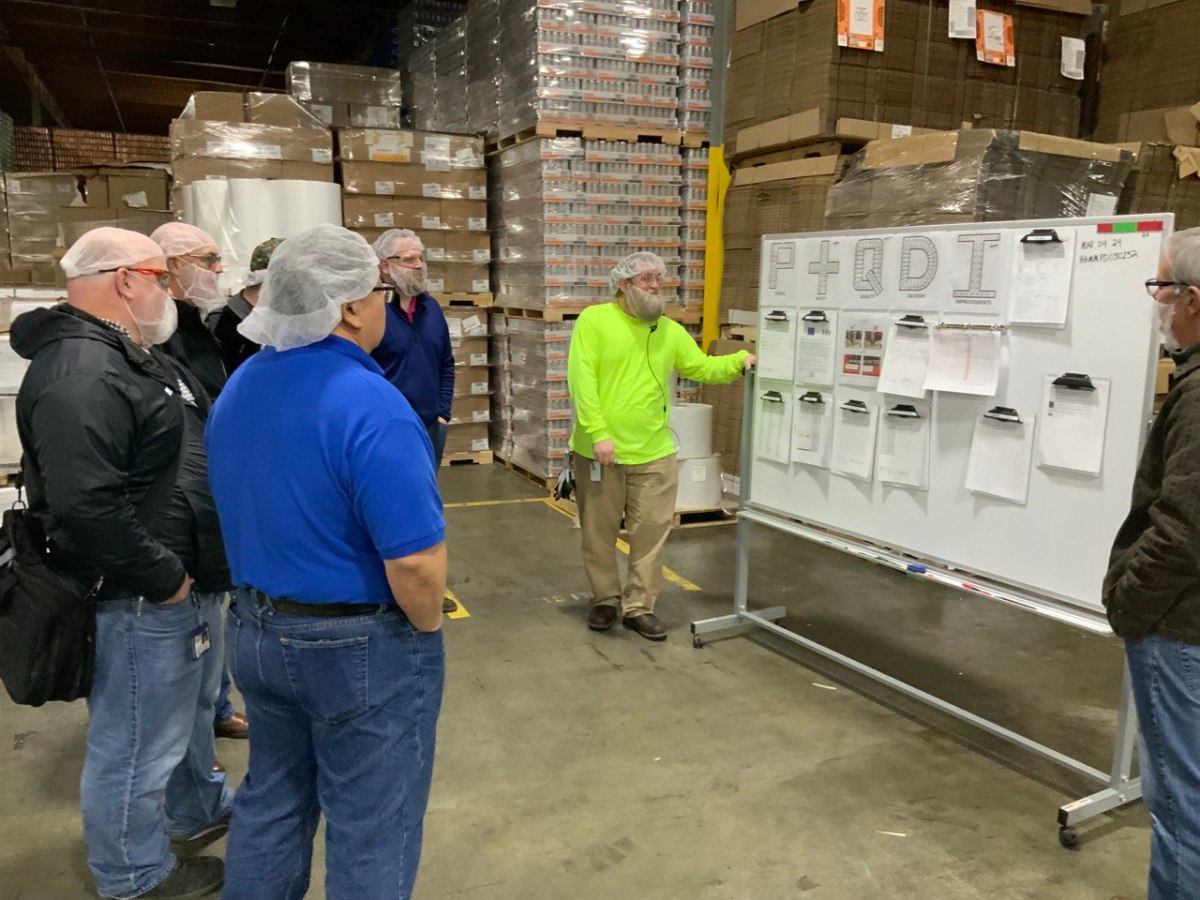
Daily Management System

his allowed everyone to track their performance and make improvements where necessary. We also provided regular feedback to our hourly team members and operators on their performance and how they were contributing to the overall success of the business.

Using Visual Tools to Manage Your Team, Department, or Organization

I am excited as we have rolled out our new Daily Management System and Portland Bottling Company., As a manager in the beverage industry, it’s essential to have a clear and concise visual management system in place. This system should be updated regularly with Key Performance Indicators (KPIs) to ensure that everyone on the team is on the same page. The purpose of a visual management board is to provide everyone with a comprehensive overview of the business’s performance and to promote transparency and accountability, and teamwork.

In this blog post, we will be discussing how we updated our visual management board with KPIs, and how we got our hourly team members and operators involved in the process.
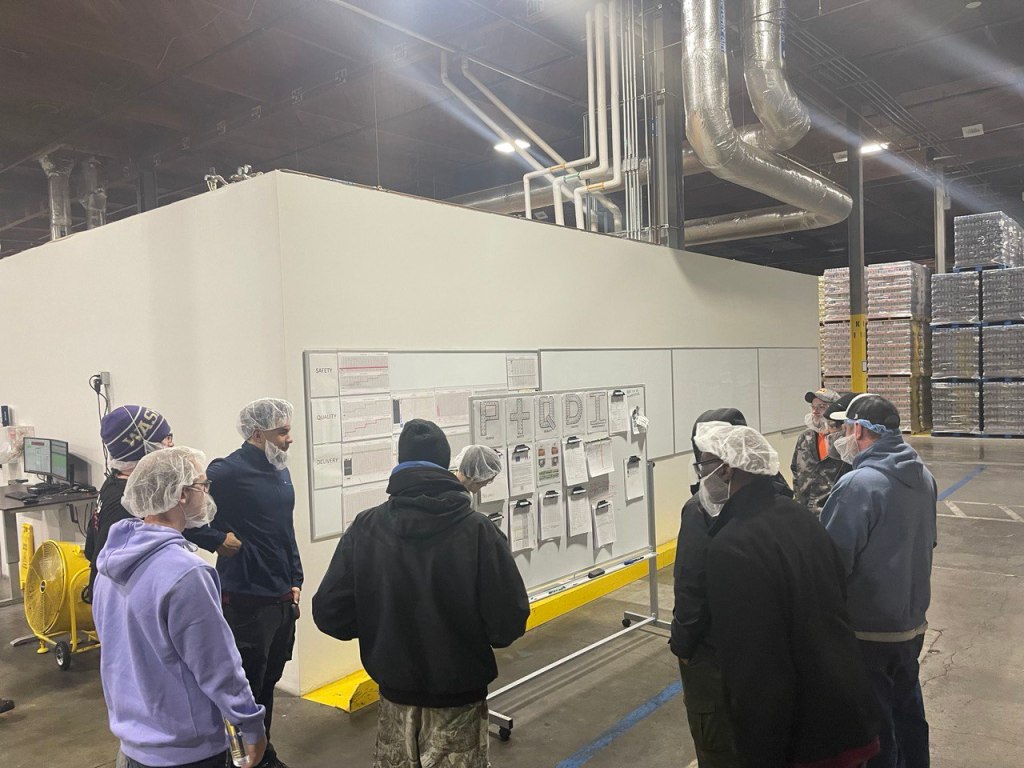
Step 1: Identifying the Key Performance Indicators

The first step in updating our visual management board was to identify the KPIs that would be the most impactful for our team. We considered a range of factors, including production efficiency, product quality, and customer satisfaction, to determine which KPIs would be the most relevant. All team members got to weigh in on the discussion. The critical point is that if your hourly team members are going to “own” the board, they have to be involved in the creation process.

Step 2: Setting Up the Visual Management Board

We chose to go with a basic board but with a twist or two on it.

  1. Since we truly believe that our People are our greatest asset – that KPI comes first.
  2. Secondly, we chose Safety as that easily coincides with taking care of our team members and ensuring compliance with training requirements.

Step 3: Involving the Hourly Team Members and Operators
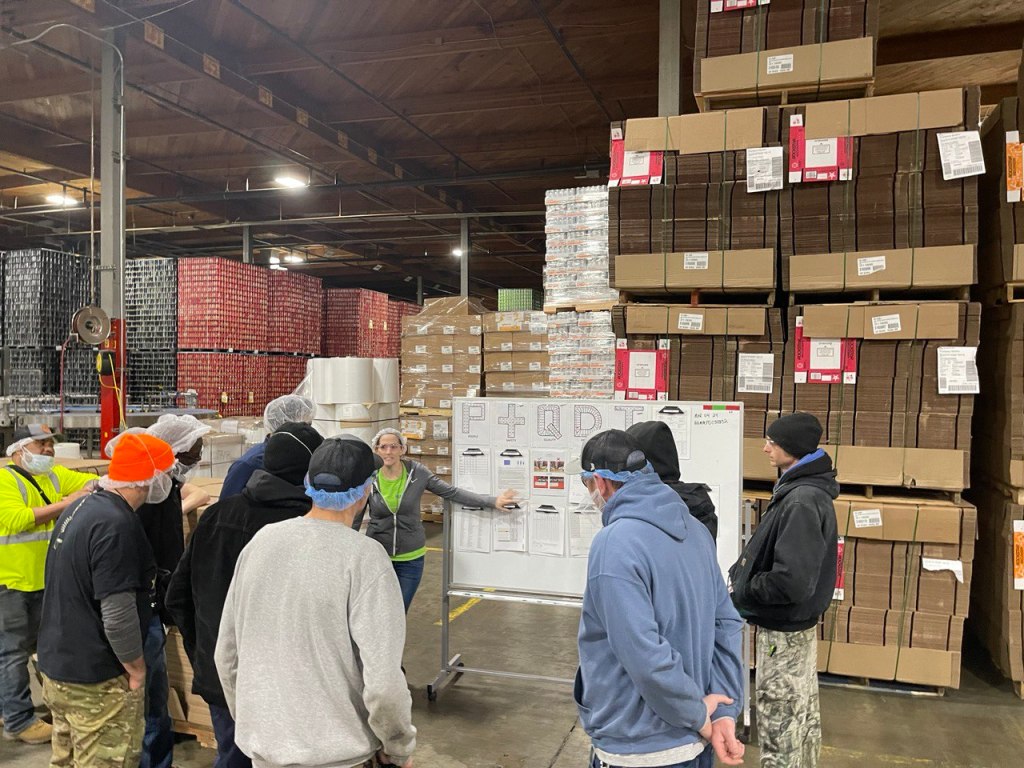
Once we had identified some of the KPIs, we set up a visual management board in our production office area. We held multiple training sessions with multiple departments and even enjoyed “mock” meetings where we got to do a meeting and offer feedback and support to each other. It actually turned out to be quite fun.

The next step was to get our hourly team members and operators involved in the process. We organized a team meeting and invited everyone to discuss the new visual management board. During the meeting, we explained the purpose of the board and how the KPIs would be used to improve production efficiency and customer satisfaction. We also invited everyone to suggest additional KPIs that they believed would be beneficial.

As we implemented the system live, the boards were placed as close to the machines as possible, where they could be easily seen by everyone on the team. We used color-coded charts and graphs to display the KPIs, which made it easy for everyone to understand the data.

Step 4: Updating the Visual Management Board Regularly

We updated the visual management board regularly, ensuring that the KPIs were accurate and up-to-date. This allowed everyone to track their performance and make improvements where necessary. We also provided regular feedback to our hourly team members and operators on their performance and how they were contributing to the overall success of the business.

Step 5: Celebrating Success

Finally, we celebrated success by recognizing the achievements of our hourly team members and operators. This helped to promote a positive and motivated work environment, and it encouraged everyone to continue working towards our shared goals.

Step 6: Management Gemba Walks
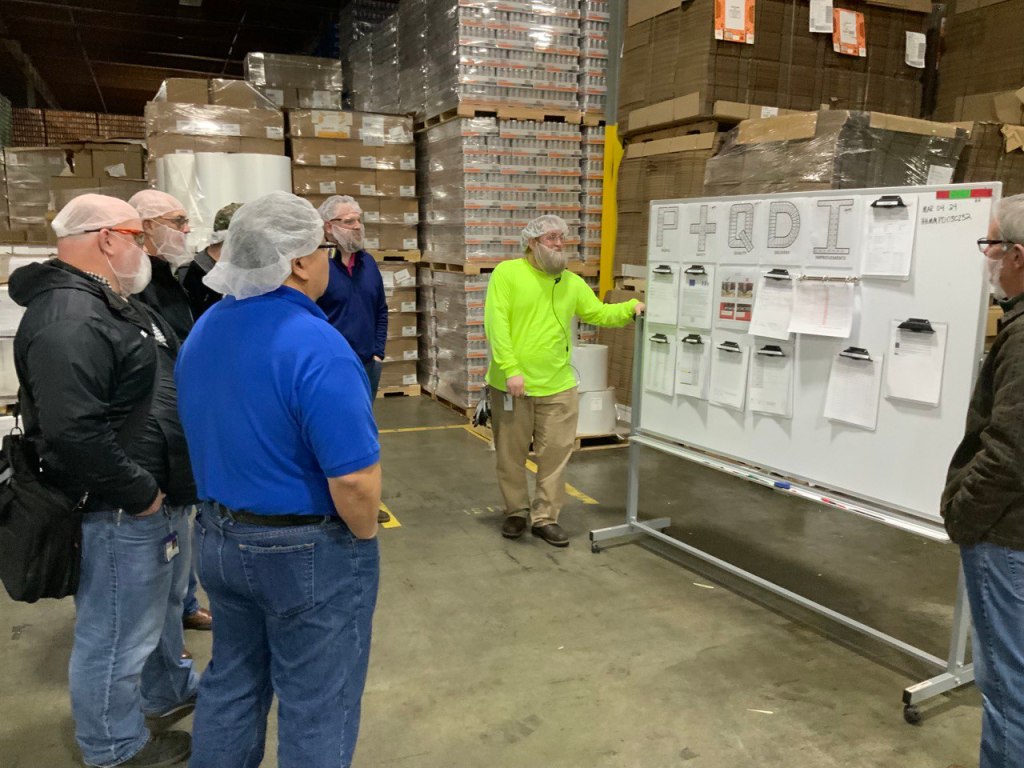
Don’t forget about your Management Gemba Walks.

The purpose of management Gemba walks in a visual management system is to enable managers to observe and evaluate how work is being performed in the workplace. Gemba is a Japanese term that means “the real place” or “the place where work is done.” Gemba walks are a management technique that involves going to the actual location where work is being performed, observing the process, and talking to the employees who are performing the work.

In the context of a visual management system, Gemba walks allow managers to see how the system is functioning in practice, identify any issues or problems, and make necessary improvements. Visual management systems are designed to make information about processes, performance, and quality visible and easily understandable, so Gemba walks can be used to ensure that the information being presented is accurate and up-to-date.

Our managers do their formal Gemba twice a week to observe as close to the machine as possible. By actively engaging with employees and observing the process in action, managers can gain a deeper understanding of how work is being done, identify any inefficiencies or areas for improvement, and provide feedback to the team. Gemba walks also provide an opportunity for managers to build relationships with employees, demonstrate their support for the team, and reinforce the importance of continuous improvement

In conclusion, updating our visual management board with KPIs has been a valuable process. It has helped us to promote collaboration, teamwork, and a shared understanding of our goals. By involving our hourly team members and operators in the process, we have been able to improve production efficiency, product quality, and customer satisfaction.

Kaizen Event Code Of Conduct

The difference between a successful Kaizen event and an unsuccessful one is getting buy-in on these six key items. Downloadable template included.

6 Keys to Frame Your Next Kaizen Event

He came into my office and asked if I could come and help “reign in” the kaizen event that he was leading. I asked what was going on and he replied “we are so off track. I don’t know how we got there or how to get us back. I’m close to just calling it quits if we can’t focus and get our deliverable done in time.”

The team was on a short unscheduled break to let the energy come down. We went to the training center and did a quick review. Looking at the room arrangement, the sticky notes, the writing on the walls, and reviewed the agenda. Things looked in order except for one missing ingredient.

He was not facilitating with a presentation deck but just using an easil and paper with some sticky notes and a black marker. No problem still except two key items were missing.

The first thing I noticed was the absence of a Parking Lot. I asked the facilitator “how are you capturing the out of scope ideas?” He answered “we aren’t. We are talking about everything as it come up.” Parking Lot use is not one that I will address here but it is a gap that contributes to Kaizen event scope creep.

The second and most important thing missing was the Kaizen Code of Conduct; an agreement between the team members that will frame how we act and interact during the event.

The difference between a successful Kaizen event and an unsuccessful one is getting buy-in on these six key items.

I asked him to describe the things that are happening that are contributing to the derailment. See if his response sounds similar to any of your experiences:

  • “The process owners were late and keep leaving the event”
  • “A few of the them are spending more time checking e-mail than participating in the brainstorming. Then when they tune in we have to recap what we just taked about”
  • “Two of the participants have strong personalities and are reacting in ways that is causing others to remain quiet and not participate”
  • “The engineers got up to go get coffee 15 minutes before the coffee order I planned for arrived”
  • “The room is a mess and is going to take me forever to put it back at the end of the day”

Any of those ring a bell? They do with me. So here we will go over setting up your event for success by using a code of conduct around six key items.

Safety

Most Kaizen events will include participants from varied departments in an organization or even people outside the organization who may be unfamiliar with the safety norms. Review key safety items that are specific to your industry. Are there any special hazards that participants should be aware of. At times this may seem like a waste but it is important to remember that often, participants are pulled from their normal work areas so the hazards or evacuation routes may be different than they are accustomed to.

Also review general safety items like locations of first aid items, AED availability, and your organizations procudure for emergency situations, evacuation routes, etc.

Refreshments and Restrooms

Ensure that you provide refreshments prior to the kickoff of the event and communicate that they will be available. Be sure to arrange refills to be available during the schedule breaks. Doing so will provide structure to the breaks.

As an addition to the agenda, let your participants know when lunch will be served (if applicable)

Going along with refreshments, make sure you communicate to participants where the restrooms are.

Time Managment

Gain committment from the group to start on time and end on time – including starting and returning from scheduled break times. This will will keep the flow of the meeting on track. Another key to good time management is to follow the agenda. One caveat is that there may be situations where new data is presented that warrants a pivot from the agenda. This should be the exception and with thte support of the Kaizen sponsor.

Post Event 5S

Recently I walked in to a room to set up for an event. Luckily I was very early because the room had not been put back to its normal condition. After moving tables, chairs, erasing the dry erase boards, and setting up the AV equipment to the standard I could get to the work of preparing for the event.

Don’t be the facilitator that leaves the room a mess. Get committment from the participants to put the room back to standard and properly dispose of waste.

Minimize Distractions

This is probably my biggest pet peave as a facilitator and a participant. Most likely yours as well – people constantly on their phones or laptops doing work unrelated to the event. Getting committment from the team to minimize cell phones, tablets, and laptop use except for value added activity such as taking notes will keep the group engaged and focused.

Be Respectful

Have you ever been part of an event where the discussion got heated? I have. Not fun! This is important to gain buy in at the beginning, especially if there are supervisor or managers interacting with direct or indirect reports. Team members will begin to feel uneasy about participating if leadership or others with strong personalities begin to treat others with disrespect. Establish that everyone’s value and ideas in the room are equal.

Conversations can get heated so give each other permissiong to call timeout if necessary and let the energy subside.

Summary

These six items, shared and committed to by the event participants, will provide parameters that help ensure the success and effectiveness of your next Kaizen event.